Why Disc Stack Centrifuges Are Ideal for mAb Production?
A disc stack centrifuge uses a series of conical discs inside a rapidly rotating bowl to create a large settling area. This design dramatically increases separation efficiency while maintaining continuous operation.
For monoclonal antibody production, the technology offers several advantages:
High Clarification Efficiency
The disc stack design provides excellent removal of mammalian cells and cell fragments from fermentation broth. By reducing turbidity before filtration and chromatography, manufacturers can improve downstream process performance and reduce filtration burden.
Gentle Cell Handling
Mammalian cells are highly shear-sensitive. Excessive mechanical stress can lead to cell lysis, releasing host cell proteins, DNA, and other contaminants into the product stream.
Modern pharmaceutical disc stack centrifuges utilize hydro-hermetic feed systems and controlled acceleration zones to minimize shear forces and protect product quality.
Continuous Processing Capability
Unlike batch separation technologies, disc stack centrifuges operate continuously, making them suitable for both traditional fed-batch and intensified bioprocessing platforms.
Continuous harvesting supports:
- Higher facility productivity
- Reduced processing time
- Improved process consistency
- Easier scale-up from pilot to commercial production
Huading Separator Solutions for Pharmaceutical Manufacturing
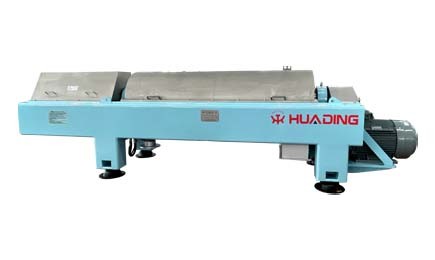
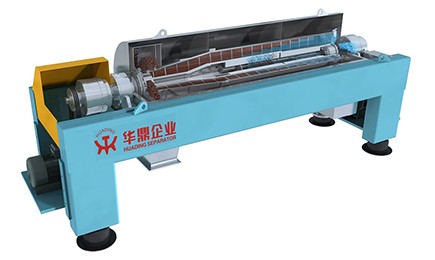
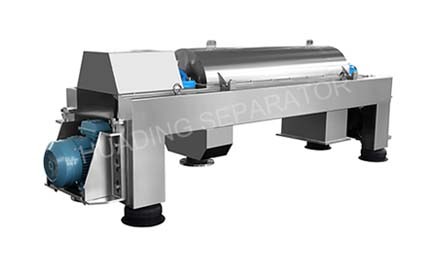
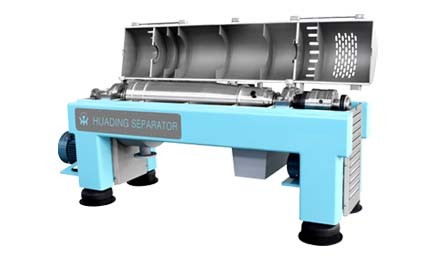
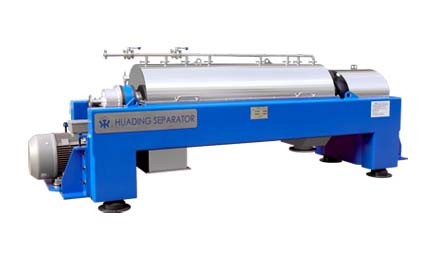
Engineered to meet the most demanding sanitary and operational criteria of US FDA, EMA, and cGMP guidelines, Huading Separator provides dedicated disc stack centrifuges optimized for pharmaceutical and bioprocess applications. Specifically, the BTSX-M series in steam-sterilizable design provides an ideal match for high-value mAb harvesting, vaccine separation, and blood plasma separation.
| Technical Feature |
Design Standard / Specification |
Operational Benefit in mAb Production |
| Material Construction |
Duplex Stainless Steel (S32205 / 316L) |
High corrosion resistance and structural integrity under high G-forces. |
| CIP & SIP Capabilities |
Full Clean-in-Place (CIP) & Steam-In-Place (SIP) |
Validated automated cleaning followed by rotational sterilization using superheated steam at overpressure of 2.5 bar and temperatures up to 137°C. Prevents cross-contamination. |
| Absolute Biocontainment |
Hermetically Enclosed Machine Design |
Prevents living cell cultures, genetically modified organisms (GMO), or biological aerosols from escaping into the facility atmosphere. |
| Inlet & Outlet Mechanics |
Hydro-hermetic Inlet & Centripetal Discharge Pumps |
Soft-stream acceleration minimizes cell lysis. Target proteins are discharged completely foam-free and under pressure. |
| Product Protection |
Twin-action Slide Ring Packing & Cooling Jacket |
Reliable separation between drive chamber and product chamber excludes motor and gear contamination. Two-wall hood cools recovered proteins. |
| Advanced Automation |
PLC Automated Control (Siemens/ABB) |
Stand-alone or master-system integrated control enables error-free replication of recipes, ejection intervals, and biomass harvesting at the push of a button. |
Integration into the Complete Purification Pipeline
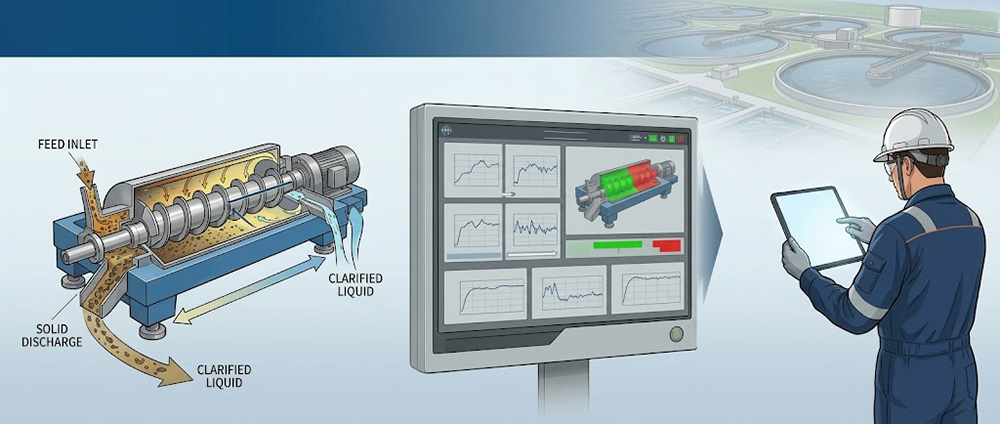
Implementing a high-efficiency disc stack centrifuge as the primary clarification step alters the downstream profile favorably. In the disk stack centrifuge, the suspension is separated into solids and clarified liquid continuously. By removing bulk biomass and cell fragments under sterile conditions, the centrifuge dramatically reduces the solid particle load directed onto secondary depth filters and sterile membrane filtration stages.
After sterilization, the separator is blanketed with sterile air (which also cools down the machine), ensuring a seamless transition to the next product run. This protection extends the operating life of expensive downstream filtration matrices and enhances the binding efficiency of subsequent Protein A affinity chromatography columns.
The Future of mAb Downstream Processing
As monoclonal antibody production continues moving toward higher cell densities, continuous bioprocessing, and intensified manufacturing, efficient cell harvesting technologies will become increasingly important.
Disc stack centrifuges provide the combination of scalability, sterility, automation, and separation performance required by next-generation biopharmaceutical facilities. By integrating advanced separator technology into downstream operations, manufacturers can reduce process bottlenecks, improve product recovery, and maintain the high quality standards demanded by global regulatory authorities.
Why Partner with Huading Separator for mAb Production?
With pharmaceutical-grade features such as CIP/SIP sterilization, hermetic containment, foam-free discharge, and automated process control, the Huading BTSX-M Disc Stack Separator provides an effective solution for modern monoclonal antibody production facilities seeking greater efficiency, product quality, and regulatory compliance.
Get A Quote