
Throughflow
Jan 20,2026
In the field of separation technology, throughput is one of the most important performance indicators in centrifuge or separator datasheets. Simply put, throughput refers to the amount of material processed or transferred within a specific time period. For example, how much suspension can a centrifuge process per hour?
Throughput = processing capacity per unit time, is the core KPI of any separation process. However, optimal operation views throughput as a balance: maximizing output while meeting clarity, dryness, and recovery targets, depending on the actual characteristics of the suspension you are processing.
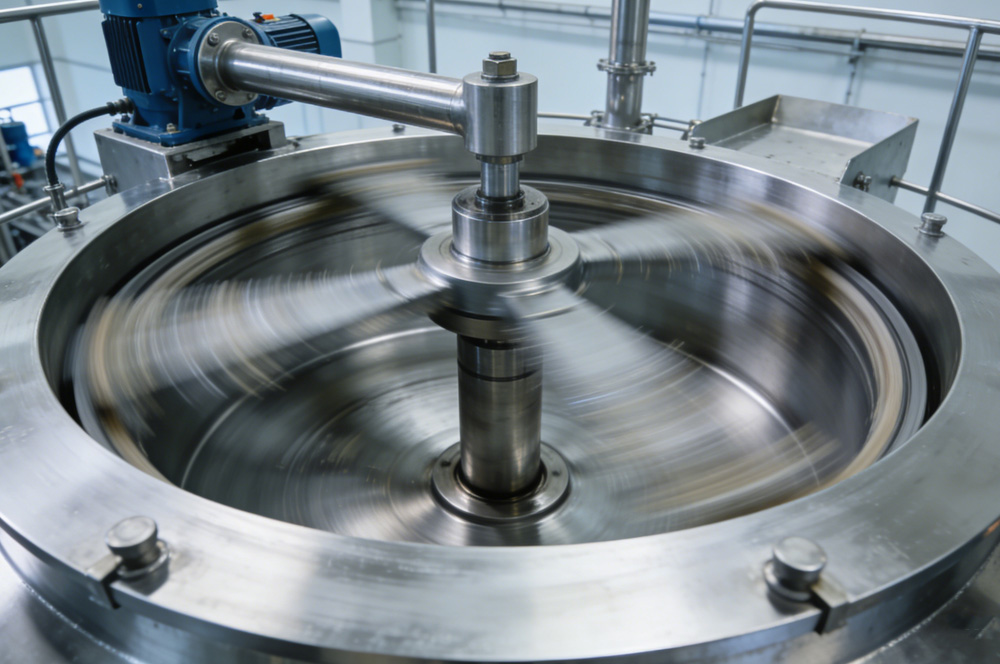
What “throughflow” means for centrifuges?
In centrifugation, flow rate essentially refers to the machine’s rated processing capacity: that is, the amount of suspension that the centrifuge can process in a given time. Commonly used units include m³/h, t/h, L/h, kg/h, and other similar units of measurement per hour.
Why throughflow is a big deal in real plants?
Flux is not simply a matter of “the higher the better.” It directly impacts:
Productivity: Higher flux can support higher output without requiring additional parallel production lines.
Product Quality: Excessive flux reduces separation efficiency and increases solid entrainment.
Operating Costs: Stable and appropriate flux helps avoid rework, downstream congestion, and unnecessary energy consumption.
What controls throughflow in separation?
In most separation equipment, throughput is influenced by feed characteristics and machine design. Here are some practical factors that affect throughput:
Feed Itself: Solid content, particle size, viscosity, temperature, and chemical properties all affect the ease with which solids can be separated. If the properties of the suspension change daily, the “safe” throughput may also change accordingly.
Separation Path Length: At a given flow rate, a shorter settling path generally improves separation efficiency. Some centrifugal separation principles emphasize that using internal inserts can shorten the settling path, thereby increasing throughput.
Machine Type and Separation Objectives: If your primary objective is to obtain a purer liquid, a disc separator is typically used to separate/clarify liquids and suspensions using centrifugal force.
If your primary objective is to process materials with high solid content and dewater, a decanter centrifuge is typically used, which continuously separates solids from liquids through high-speed rotation.
--- END ---
Prev: Suspension in Separation Technology
Next: Stokes’Law


