Microsphere Separation in Biopharma: Optimizing Purity with Disc Stack Centrifuges

Microspheres have become a critical technology platform in modern pharmaceutical and biotechnology manufacturing. From controlled drug delivery systems and vaccine adjuvants to cell therapy carriers and diagnostic applications, microspheres play an increasingly important role in improving therapeutic performance and product stability.

As production volumes grow and regulatory requirements become more stringent, manufacturers face a major challenge: how to efficiently separate, concentrate, and recover microspheres while maintaining particle integrity and process sterility.

This is where pharmaceutical-grade disc stack centrifuges have become an essential part of downstream processing.

What Are Microspheres in Pharmaceutical Manufacturing?

Microspheres are spherical particles typically ranging from 1 to 1000 microns in diameter and are widely used in pharmaceutical and biotechnology applications.

Depending on their intended function, microspheres may be manufactured from a variety of materials, including:

  • Biodegradable polymers (PLGA, PLA, PGA)
  • Lipid-based materials
  • Protein-based matrices
  • Hydrogel materials
  • Magnetic or functionalized particles

In pharmaceutical manufacturing, microspheres are commonly utilised for:

  • Sustained-release drug delivery
  • Vaccine delivery systems
  • Controlled-release biologics
  • Targeted cancer therapies
  • Cell culture and tissue engineering
  • Diagnostic and imaging applications

Because particle size distribution and consistency directly influence drug release behavior, therapeutic performance, and product quality, manufacturers must ensure precise separation, purification, and recovery throughout the production process.

Separation Challenges in Microsphere Manufacturing

Microsphere production processes often generate complex suspensions that contain target microspheres alongside residual solvents, polymer fragments, unreacted raw materials, process impurities, and carrier liquids. Efficiently separating these components is essential to maintaining product quality and maximizing recovery rates throughout the manufacturing process.

However, traditional filtration systems frequently face several operational challenges, including:

  • Membrane fouling
  • Product loss
  • Long processing times
  • Inconsistent particle recovery
  • High consumable costs

For high-value pharmaceutical products, even minor product losses can have a significant impact on overall production economics. To overcome these limitations and achieve higher efficiency, improved product recovery, and more consistent processing performance, many manufacturers are increasingly adopting centrifugal separation technologies.

Why Disc Stack Centrifuges Are Ideal for Microsphere Recovery

Disc stack centrifuges generate extremely high centrifugal forces that rapidly separate particles from liquid media.

Compared with conventional filtration methods, pharmaceutical disc centrifuges offer several advantages:

High Recovery Efficiency

The large effective settling area created by the disc stack allows efficient separation of fine microspheres while maintaining continuous operation.

This helps manufacturers maximize product yield and reduce valuable material losses.

Gentle Product Handling

Microspheres can be highly sensitive to mechanical stress.

Advanced hydro-hermetic feeding systems reduce shear forces during product entry, helping preserve particle morphology and functional characteristics throughout the separation process.

Continuous Production Capability

Unlike batch filtration systems, disc stack centrifuges operate continuously.

Continuous processing enables:

  • Higher plant throughput
  • Reduced labor requirements
  • Improved process consistency
  • Easier scale-up from pilot production to commercial manufacturing

Reduced Contamination Risk

In pharmaceutical manufacturing, contamination control is a critical requirement.

A fully enclosed centrifugal separation system minimizes environmental exposure while supporting GMP-compliant production practices.

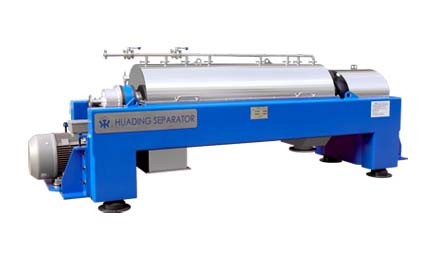
Huading BTSX-M Pharmaceutical Disc Stack Separator for Microsphere Processing

For pharmaceutical and biotechnology applications, Huading Separator offers the BTSX-M Series Disc Stack Centrifuge, specifically engineered for sterile and high-purity production environments.

The system is widely used in biopharmaceutical processing, vaccine manufacturing, monoclonal antibody production, protein recovery, cell harvesting, and advanced pharmaceutical separation applications.

Sterile SIP and CIP Design

Microsphere manufacturing often requires validated cleaning and sterilization procedures to prevent batch-to-batch contamination.

The BTSX-M Series features fully automated:

  • Clean-in-Place (CIP)
  • Steam-in-Place (SIP)

The separator can be sterilized during operation using superheated steam at temperatures up to 137°C and pressures up to 2.5 bar, ensuring reliable aseptic processing conditions.

Hermetic Process Containment

Pharmaceutical production facilities increasingly require closed processing systems to protect both products and operators.

The BTSX-M utilizes a hermetically sealed machine design that prevents biological materials, aerosols, or sensitive pharmaceutical ingredients from escaping into the manufacturing environment. This level of containment is especially valuable when processing advanced drug delivery systems and biologically active compounds.

Precise Solids Discharge Technology

One of the key challenges in microsphere production is maintaining consistent particle concentration.

The BTSX-M separator incorporates precisely controlled partial and full solids ejection technology, allowing operators to optimize particle recovery while minimizing product loss. Automated discharge cycles help ensure repeatable process performance across production batches.

High-G Force Separation Performance

Operating at centrifugal forces up to 16,000 g, the separator efficiently recovers fine particles and microspheres that would be difficult to separate using conventional sedimentation methods. This significantly improves clarification efficiency and product concentration capability.

Microsphere Production Workflow with Disc Stack Centrifuges

In pharmaceutical manufacturing, microsphere production involves multiple downstream processing steps to ensure product purity, consistency, and recovery efficiency. Disc stack centrifuges are commonly integrated into the process to separate, wash, and concentrate microspheres while maintaining product quality throughout production.

The process typically begins with microsphere formation, where particles are produced using established techniques such as:

  • Emulsion solvent evaporation
  • Spray drying
  • Phase separation
  • Polymerization methods

Once formed, the microsphere suspension is transferred to a disc stack centrifuge for primary separation. The high centrifugal force generated by the separator rapidly removes the liquid phase, allowing efficient recovery of microspheres even when dealing with fine particles or large production volumes.

After separation, the recovered microspheres often undergo a washing and purification stage. This step helps eliminate unwanted materials that may affect product performance or regulatory compliance, including:

  • Residual solvents
  • Unreacted polymers
  • Process by-products
  • Other impurities

The purified microspheres are then concentrated to achieve the desired solids content. By reducing the volume of carrier liquid, the centrifuge helps improve downstream processing efficiency and lowers the workload for subsequent drying operations.

Finally, the concentrated microspheres move to the finishing stage, where they are prepared for storage, formulation, or commercial use. Depending on the product requirements, this may include:

  • Freeze drying
  • Spray drying
  • Sterile filling
  • Final pharmaceutical formulation

By integrating disc stack centrifuges into the production workflow, manufacturers can achieve higher recovery rates, improved process consistency, and more efficient large-scale microsphere manufacturing.

Why Partner with Huading Separator for Microsphere Production?

The production of pharmaceutical microspheres requires precise particle recovery, stringent contamination control, and scalable production capacity. Leveraging decades of experience in separation technologies, Huading offers pharmaceutical-grade disc centrifuges designed for reliable and efficient microsphere recovery.

From pilot-scale development to large-scale commercial production, our systems meet the performance, sterility, and process consistency requirements of modern pharmaceutical companies.

Advantage Customer Benefit
Pharmaceutical-Grade Design Supports GMP-compliant manufacturing environments
Fully Automated SIP & CIP Systems Reduces contamination risks and cleaning downtime
Hermetic Separation Technology Protects sensitive pharmaceutical products and operators
High-Efficiency Particle Recovery Maximizes microsphere yield and product consistency
Customized Engineering Solutions Tailored to specific formulations and production capacities
Global Technical Support Reliable service throughout the equipment lifecycle
Scalable Production Capability Supports both pilot and commercial manufacturing

As pharmaceutical companies continue to expand the production scale of microsphere products, advanced centrifugal separation technology will remain a key driver for improving production efficiency, product quality, and process success rates.

Get A Quote

Online Consultation
error: Content is protected !!