Methyl ketone solvents, particularly methyl ethyl ketone (MEK), are critical solvents used in numerous industries, including coatings, cleaning, and chemical production.
The production process of this solvent involves several key steps, each requiring strict control to ensure its purity and effectiveness. Separation is one of the most crucial steps in this process, both for removing impurities from raw materials and for ensuring the purity of the final product.
In this blog post, we will delve into the production process of methyl ketone solvents, the key role of separation technology, and how quality control ensures the reliability of this solvent in industrial applications.
What is Methyl Ketone Solvent?
Methyl ketone solvent, commonly known as MEK, is a versatile organic solvent used in industries like coatings, adhesives, paints, and pharmaceuticals. MEK’s ability to dissolve various oils, resins, and polymers makes it highly valuable in applications such as cleaning and formulation processes.
However, its production must be carefully controlled to avoid contaminants, and this is where advanced separation technologies play a vital role.
The Production Process of Methyl Ketone Solvent
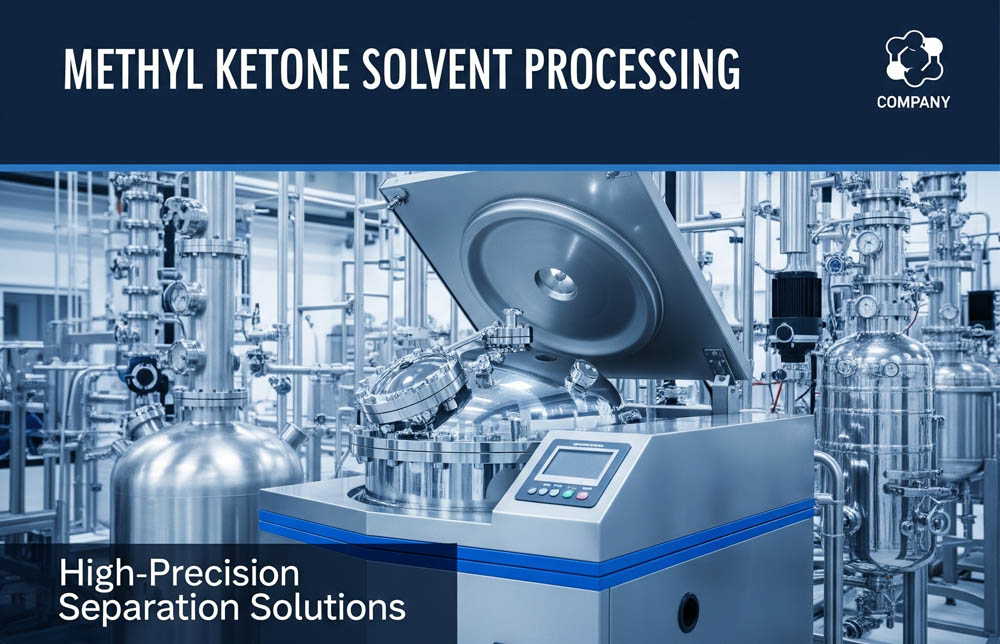
The production of methyl ketone solvent is a multi-step process, where raw materials are converted into a high-quality product. At each stage of the process, separation plays a crucial role in ensuring the final product’s purity. Below is an overview of the key steps in the production of methyl ketone solvent and how separation equipment fits into each stage.
The Role of Separation Equipment in Quality Control
Quality control is one of the most critical aspects of producing methyl ketone solvent. Without efficient separation at each stage of the process, impurities can remain in the final product, potentially impacting its performance.
Here’s how advanced separation equipment ensures the quality of methyl ketone solvent:
Purity Assurance at Every Stage
From raw material filtration to final product purification, separation equipment ensures that only the purest components are used throughout the process. Huading Separator’s filtration and centrifuge systems are essential in removing solid particles, liquids, or gases that could contaminate the solvent, ensuring consistency and high-quality output.
Consistent Solvent Quality
Separation technologies not only remove contaminants but also help maintain the consistency of the solvent’s chemical composition. Membrane separation systems, for example, can separate solvent mixtures based on molecular size, ensuring that the methyl ketone solvent produced is uniform and suitable for its industrial applications.
Maximized Yield and Efficiency
By efficiently removing waste products and unwanted by-products, separation equipment maximizes the yield of pure methyl ketone solvent. This efficiency ensures that production is cost-effective, and more solvent can be produced with less raw material.
Enhanced Safety and Environmental Compliance
The production of methyl ketone solvent requires stringent safety measures, particularly when handling volatile substances. Huading Separator’s advanced separation solutions help mitigate risks by ensuring that any toxic by-products are properly separated and disposed of, supporting environmental compliance and safety standards.
Applications of Methyl Ketone Solvent
Methyl ketone solvent is widely used across several industries, including:
- Paints and Coatings: MEK is an excellent solvent for various resins and polymers used in coatings and paints.
- Industrial Cleaning: Due to its powerful solvent properties, MEK is often used for cleaning machinery, metal parts, and even as a paint stripper.
- Pharmaceuticals and Chemicals: MEK is also used in pharmaceutical and chemical industries for the synthesis of active ingredients and as a solvent in various formulations.
Conclusion
The production of methyl ketone solvents is a highly specialized process, relying on precise techniques and rigorous quality control at every stage. Separation equipment plays a crucial role in ensuring the final product is free of impurities and meets industrial application standards.
With the help of advanced separation technologies provided by companies such as Huading Separators, the production process is more efficient, safer, and more environmentally friendly.
By maintaining high standards of quality control and employing reliable separation systems, industries can have complete confidence in the performance and reliability of methyl ketone solvents in their applications.


