
High-Efficiency Cellulose Processing with Modern Centrifugal Equipment
Dec 17,2025
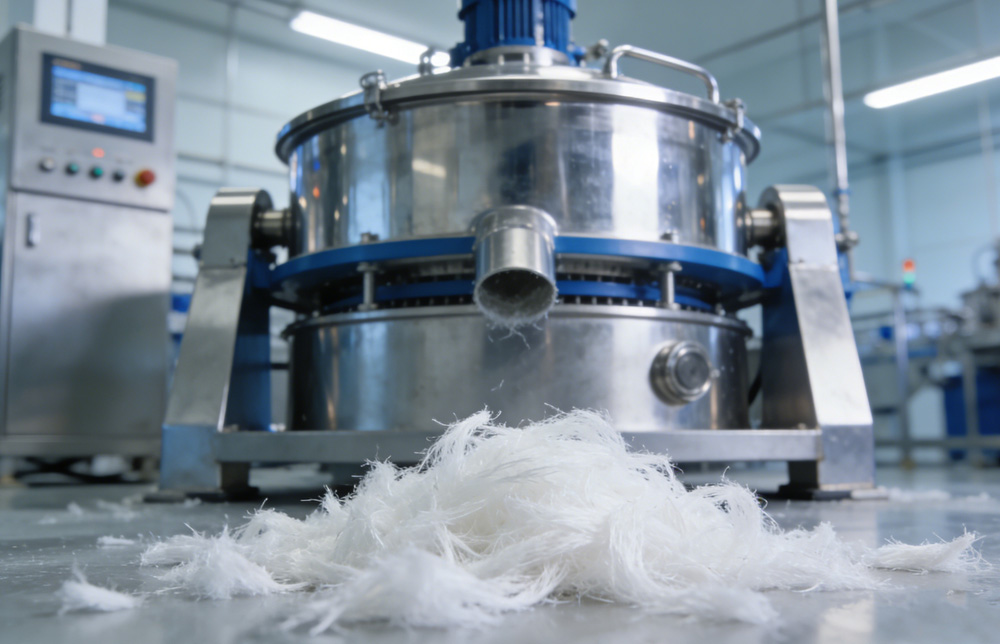
Cellulose has become one of the most widely used and strategically important biopolymers in modern industry. As a major structural component of plant cell walls, cellulose is renewable and abundant.
Its applications are wide-ranging, encompassing papermaking, high-performance textiles, biodegradable plastics, pharmaceuticals, filter media, and even sustainable fuels. However, despite its enormous potential, cellulose processing still faces numerous technical challenges, especially when liquid-solid separation or multiphase separation is involved.
Manufacturers across various industries face challenges with fiber-rich pulps, high-density pulps, viscous solutions, or multiphase chemical mixtures.
In these cases, traditional filtration or sedimentation methods are often too slow, inconsistent in effectiveness, or prohibitively expensive to maintain. Therefore, centrifugal separation technology has gradually become the cornerstone of efficient cellulose processing.
Huading Separator offers a comprehensive range of centrifugal equipment, including Decanter centrifuges, disc separators, and dedicated three-phase separators, designed specifically for handling complex industrial mixtures.
While these devices are used in numerous industries, they play a particularly important role in the extraction, regeneration, purification, and waste treatment of cellulose.
The Industrial Significance of Cellulose Processing
The industrial lifecycle of cellulose typically involves multiple conversion stages. First, biomass is mechanically and chemically processed into pulp. Depending on the downstream application, the pulp may require dewatering, washing, reaction with solvents, dissolution into derivatives, or refinement into microfibrillated or nanofibrillated cellulose.
Each stage produces mixtures that are difficult to separate using traditional methods. Fibers may be too fine to be retained with simple sieves. Some are too long and tangled to pass smoothly through filters without clogging.
The pulp may have high viscosity, altering sedimentation behavior. In the production of chemical derivatives, multiple immiscible liquids and suspended solids must be separated in a continuous process.
These realities have prompted manufacturers to develop equipment capable of handling materials that:
- high solids content
- fibrous or shear-sensitive materials
- multiphase interactions
- continuous, large-scale processing
- high purity requirements
- corrosive or chemically aggressive environments
Centrifugal equipment is more effective at meeting these needs compared to gravity-driven or filtration systems.
Why Centrifugal Separation Fits the Nature of Cellulose?
Centrifugal separation accelerates natural sedimentation forces thousands of times over. By spinning at high rotational speeds, the equipment creates a controlled environment where differences in density cause liquids and solids to stratify rapidly.
This approach is especially suited to cellulose because its particles, fibers, and derivative compounds behave predictably under centrifugal forces even when they do not settle efficiently by gravity.
In typical cellulose applications, centrifugal equipment supports:
Efficient Dewatering and Thickening
Cellulose slurries and pulps often contain a high percentage of water. A decanter centrifuge continuously separates solids and liquids, producing dryer cake and clearer centrate than traditional press or filter systems. The horizontal bowl design continuously discharges solids, enabling uninterrupted operation.
Clarification of Liquids Containing Fine Cellulose Fibers
Disc-stack separators provide extremely high centrifugal force, making them capable of removing ultra-fine particles from process liquids. In applications where the cellulose fibers or micro-fibrils remain suspended even after mechanical screening, disc separators achieve clarity at levels that filtration alone cannot.
Multi-Phase Chemical Separation
Cellulose derivative production, such as viscose or cellulose acetate, often involves solvent systems in which two liquids and a solid phase interact. A three-phase separator, or tricanter, simultaneously splits light liquid, heavy liquid, and solids in one step, reducing processing time and minimizing solvent loss.
Fiber Recovery and Waste Minimization
In pulp and paper wastewater, or in residue streams from cellulose modification processes, large volumes of dilute fiber must be removed. Continuous centrifugation recovers valuable cellulose, lowers sludge volume, reduces water consumption, and cuts downstream treatment cost.

How Industrial-Grade Centrifuges Support Cellulose Workflows?
Huading Separator’s equipment embodies engineering principles perfectly suited to the challenges of cellulose processing. While the product line varies in size, speed, and configuration, the following design features are particularly important:
Continuous Operation
Cellulose processing rarely employs intermittent production. High-volume production of pulp, derivatives, or recycled fibers requires consistent throughput. Industrial centrifuges maintain stable performance over long cycles, automatically adjusting to solid loads and continuously discharging separated phases.
Stainless Steel and Corrosion-Resistant Materials
Chemical cellulose processing, such as that using sodium hydroxide, acids, or organic solvents, requires equipment constructed from high-grade stainless steel or corrosion-resistant alloys. The centrifuges showcased on the website specifically emphasize the use of such materials to ensure reliability and product purity.
High Precision and High Separation Efficiency
Whether purifying chemical solutions or removing microfibers from process water, centrifugal systems achieve separation clarity far exceeding that of traditional filtration. On-site partial separators can clarify pulp to an extremely fine degree, making it suitable for high-value derivative applications.
Automation and Control
Modern cellulose production lines benefit from automated control of torque, feed rate, vibration, and filter cake dryness. The existing system integrates monitoring and intelligent control components to maintain process stability and minimize operator intervention.
Customized Engineering to Process Requirements
The properties of cellulose vary depending on its source, processing method, and end use. Machines designed for paper-grade pulp may not be suitable for the production of solvent-based cellulose acetate. This website highlights the ability to customize configurations, materials, and separation stages to meet specific industry needs.
Application Scenarios Where Centrifugation Enhances Cellulose Production
Cellulose Extraction from Biomass
Agricultural residues, wood chips, and specialty fibers must be processed into clean, dewatered pulp before chemical modification. Decanter centrifuges perform the thickening and dewatering steps while preserving fiber integrity.
Viscose and Lyocell Processing
The conversion from pulp to cellulose solution produces chemical mixtures requiring highly controlled liquid, liquid and liquid, solid separation. Three-phase centrifuges streamline this step and minimize solvent loss.
Production of Cellulose Acetate
This process contains acetylation, hydrolysis, and washing stages where suspended solids, heavy organic liquids, and aqueous layers must be separated. High-speed separators ensure clarity and stable reaction conditions.
Micro-Fibrillated Cellulose (MFC) and Nanocellulose
MFC and nanocellulose slurries have very fine suspended particles with high viscosity. Disc separators handle these challenging mixtures more efficiently than filters or screens.
Wastewater and Fiber Recovery
Paper mills and cellulose-processing facilities often operate under strict wastewater discharge rules. Centrifugal systems recover fiber, reduce sludge volume, and improve water reuse.
Selecting the Right Machine for a Cellulose Processing Line
Choosing the appropriate centrifugal equipment depends on:
- Solids concentration and fiber morphology
- Viscosity and rheology of the slurry
- Whether the process involves two or three phases
- Desired dryness of the solids
- Required clarity of the liquid
- Chemical environment and corrosion resistance needs
- Continuous or batch operation
- Space and integration constraints
Our experts provide comprehensive technical insights and process support to help users select the most suitable and efficient separation solutions for their specific applications.
Whether it’s a Decanter centrifuge for efficient pulp concentrating, a disc separator for achieving superior liquid clarity, or a multiphase separation system designed to meet the demanding conditions of cellulose derivative production, we ensure that the right technology is available for every operation.
Conclusion
For any cellulose-centric production activity, whether it’s extraction, modification, regeneration, or processing cellulose-rich residues, integrating appropriate cellulose separation technologies can have a significant impact.
Choosing the right equipment can improve process efficiency, enhance product consistency, reduce environmental footprint, and help lower overall operating costs.
If your production line processes cellulose and your goal is to increase output, reduce waste, or achieve better clarity and dryness, then Huading Separator’s solutions offer a reliable, engineering-based path forward.
These systems provide stable, efficient separation across all stages, from pulp processing to high-purity chemical refining and wastewater treatment, helping your production operations become more efficient and sustainable.
--- END ---


