
Separator Functional Principle
Dec 17,2025
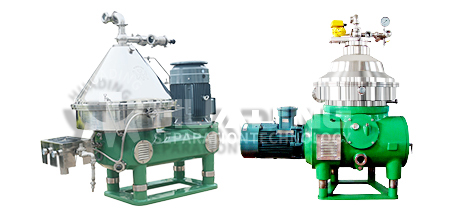
A separator works by applying high centrifugal force to a mixed stream so that components with different densities separate quickly and efficiently. Unlike gravity settling, which can take minutes or hours, a separator accelerates the process by spinning the mixture at high speed inside a rotating bowl.
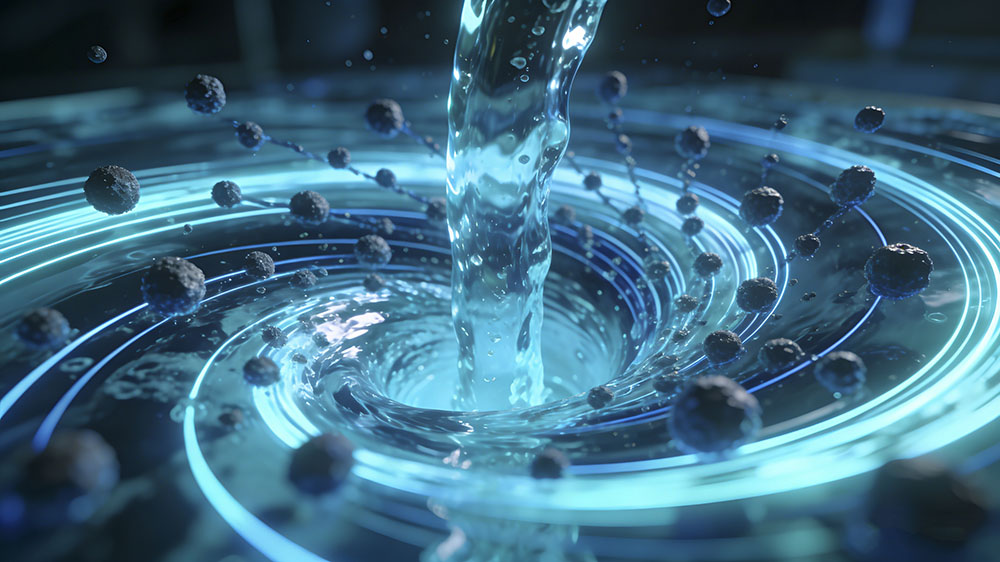
As the bowl rotates, heavier solids or dense liquid phases move outward toward the bowl wall, while lighter liquids migrate toward the center. This controlled stratification creates clean, well-defined layers that can be continuously discharged through dedicated outlets.
How Does a Separator Work?
Feed acceleration
The incoming mixture is gently accelerated to full rotational speed, minimizing turbulence and allowing efficient phase separation.
Centrifugal force
High rotational speed generates forces thousands of times greater than gravity, making density differences the dominant factor for separation.
Clarifying surfaces
In disc-stack separators, multiple conical discs create large settling surfaces, enabling fine particles or small droplets to separate rapidly.
Continuous discharge
Separated phases, light liquid, heavy liquid, or solid are discharged through independent outlets, keeping the process stable and uninterrupted.
Why This Principle Matters?
When processing complex mixtures, the properties of the feed place higher demands on the separation system. Finer particles, multiphase liquids, viscous or fibrous materials, and high throughput all mean that separation equipment cannot rely solely on gravity or basic filtration.
The operating principle of high-performance separators ensures:
- Fast and reliable phase separation even under complex feed conditions
- High liquid clarity and dense solid discharge
- Minimal load on downstream filtration or treatment systems
- Stable operation even under varying feed conditions.
Operational Insights
To get the best performance from a separator:
- Select a design that matches the solids content, viscosity, and phase composition of your mixture.
- Ensure smooth feed introduction to avoid shear that can disturb separation layers.
- Adjust bowl speed, discharge settings, and flow rates based on process requirements.
- Maintain clean internals and precise mechanical alignment to preserve separation efficiency.
Conclusion
A separator operates by enhancing natural separation forces through high-speed rotation, optimized internal geometry, and continuous discharge of separated phases. This principle enables fast, reliable, and high-quality separation across a wide range of industrial applications.
--- END ---


