
Probiotic Fermentation Broth Clarification: How to Choose the Right Centrifuge
Aug 09,2026
Probiotic production depends on maintaining high cell viability and consistent recovery throughout the manufacturing process. Once fermentation is complete, the bacterial cells need to be efficiently separated from the fermentation broth before they can move on to concentration, formulation and drying. The way this step is handled can have a direct impact on cell recovery, product consistency and overall production yield.
Centrifugation is widely used for this purpose because it allows probiotic biomass to be separated and concentrated efficiently at an industrial scale. The right centrifuge, however, depends on the characteristics of the fermentation broth, the required throughput and the stage of the process.
At Huading, we manufacture disc stack separators, decanter centrifuges and tubular centrifuges for industrial separation applications. In this guide, we look at how centrifugation is used in probiotic production, where each type of centrifuge fits into the process, and the key factors to consider when selecting equipment for a production line.
The Role of Centrifugation in Probiotic Production
Probiotic strains are produced by fermentation: a liquid medium is inoculated with a bacterial culture, which multiplies until the broth holds a high concentration of cells. That broth is a suspension of bacteria in water, with spent medium, proteins, and other solids mixed in. The bacteria have to be recovered, concentrated, and often washed before they can be dried, blended, or formulated into finished products.
Filtration struggles with bacterial cells, which are small, soft, and easily damaged. Centrifugation does not rely on a filter medium at all. It applies centrifugal force thousands of times stronger than gravity, and the bacteria, being denser than water, settle out cleanly and quickly. That is why nearly every serious probiotic production line uses a centrifuge at the cell harvesting stage.
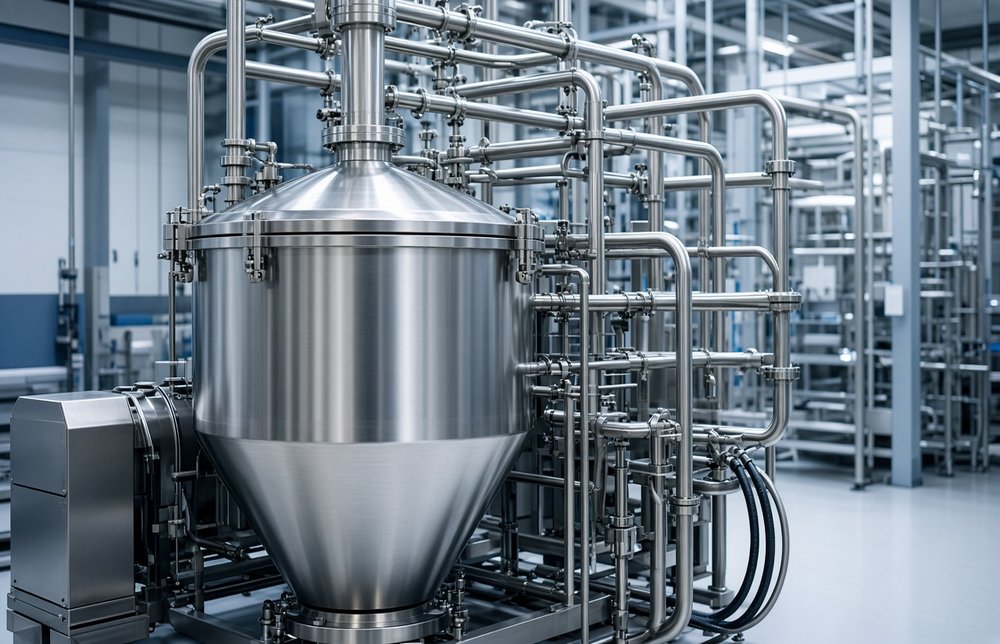
The Three Centrifuge Types for Probiotic Lines
Disc Stack Separators: The Harvesting Standard
The disc stack separator is widely used for bacterial cell recovery because it combines fast separation with continuous operation. Fermentation broth passes through a rapidly rotating stack of conical discs, creating a large settling area that allows bacterial cells to separate from the liquid within seconds.
In self-cleaning separators, the concentrated biomass is discharged automatically through nozzles or by periodically opening the bowl. There is no need to stop the separator for manual solids removal, making the process well suited to continuous production.
For probiotic plants operating around the clock, self-cleaning disc stack separators are often the preferred choice for primary cell harvesting. They can handle the biomass concentrations commonly found in industrial fermentation, provide reliable cell recovery, and reduce downtime between production runs.
Decanter Centrifuges: For Heavy or High-Solid Broths
A decanter centrifuge spins a horizontal bowl with a screw conveyor inside, and it is built for broths with heavy solids loads. If your fermentation produces a lot of cell mass or includes insoluble media components, a decanter can clarify the stream before it reaches the disc stack, or handle the sludge discharge on its own.
Decanters are more tolerant of dirty feeds and larger particles. They are the right choice when the broth is thick, the solids fraction is high, or the line needs a single machine that can manage both clarification and dewatering.
Tubular Centrifuges: For High Purity and Small Batches
A tubular centrifuge spins a narrow, long bowl at very high speed, generating the highest separation force of the three types. It produces the cleanest separation and the densest cell paste, which matters for high value strains and for lab to pilot scale batches.
The trade-off is throughput. Tubular centrifuges run in batches and need the bowl cleaned out regularly, so they suit smaller production volumes, specialty strains, or final polishing steps rather than continuous large scale harvesting.
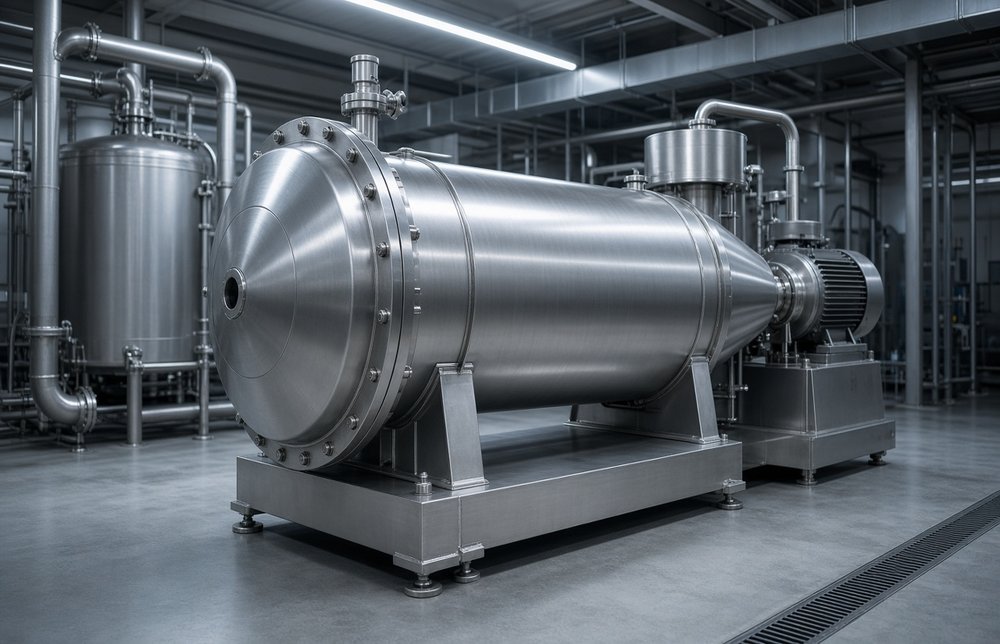
Choosing by Process Step
Most probiotic lines use more than one machine. A typical arrangement looks like this:
Cell Harvesting➔
Washing➔
Polishing
- Pretreatment. If the broth is heavy with solids, a decanter removes the bulk so downstream equipment runs cleaner.
- Cell harvesting. A self-cleaning disc stack separator concentrates the bacteria from the clarified liquid.
- Washing. If the process needs washed cells, the concentrate is resuspended and separated again in the same disc stack.
- Polishing. For premium strains, a tubular centrifuge produces the final, densest paste.
The machine you need depends on where you are in that chain. Buying a separator without mapping it to the process step is how lines end up with the wrong machine.
Hygiene and Design Requirements
Probiotic manufacturing runs under food and pharmaceutical grade hygiene rules, and the centrifuge has to match. Three design features matter:
- Clean in place (CIP). The machine should clean itself in place with automated wash cycles, so the internals are flushed without dismantling. This is standard on modern self-cleaning separators and essential for running multiple batches safely.
- Sterilization in place (SIP). For pharmaceutical grade production, the separator must be steam sterilizable in place. Steam sterilizable designs seal the bowl and frame so the process zone can be sterilized between batches, which eliminates contamination risks that manual cleaning cannot remove.
- Materials and surface finish. All product-contact parts should be made of stainless steel with a sanitary-grade finish. Gaskets and seals also need to tolerate the cleaning chemicals and steam used during CIP/SIP cycles. Before placing the order, ask the supplier to provide material certificates and confirm the wetted-part specifications in writing.
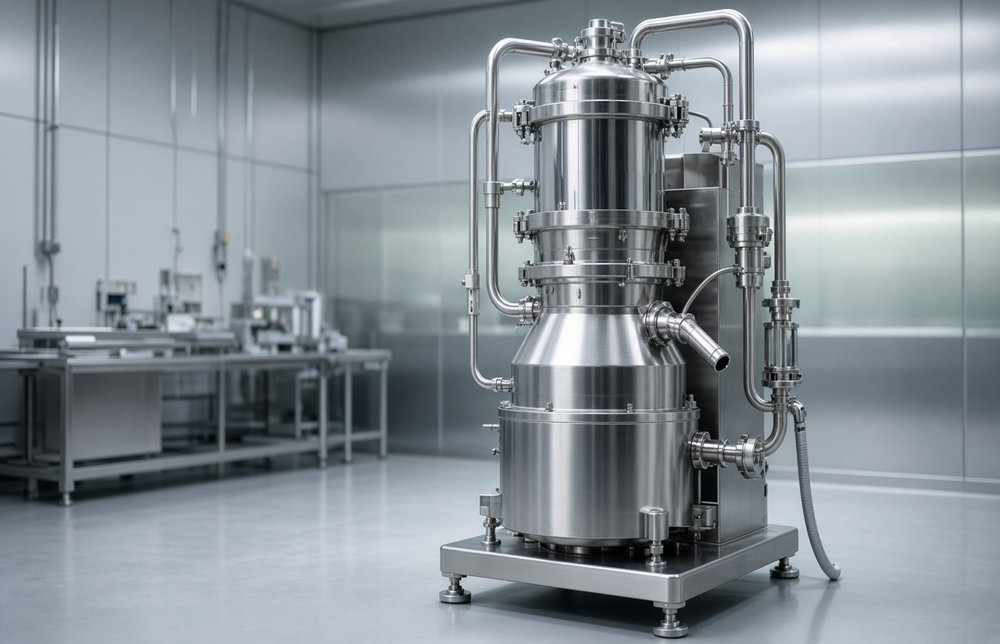
How Huading’s Separators Fit Probiotic Lines
We design separators for biotech and pharmaceutical applications, with configurations to suit different processes and production scales. Our self-cleaning disc stack separators are available in steam-sterilizable versions for processes that require SIP. For high-volume production with continuous solids removal, nozzle separators provide a practical solution, while chamber bowl separators are better suited to clarification duties with relatively low solids content.
For pilot-scale production, small batches, and applications where product purity is especially important, our GQ tubular centrifuges offer another option.
All equipment is supplied with documentation covering materials, hygienic design, and CIP compatibility. Before recommending a model, our engineers review your broth characteristics, solids concentration, required throughput, and batch size so the separator is matched to the actual process rather than selected from a standard specification sheet.
Related Equipment from Huading
Self-Cleaning Disc Separator: continuous bacterial cell harvesting with automatic sludge discharge.
Steam-Sterilizable Self-Cleaning Disc Separator: pharmaceutical grade design with SIP capability.
Nozzle Separator: continuous solids discharge for high volume, high solids broths.
Cell Viability and Yield Considerations
Probiotic products are sold on live cell counts, so the separation step has to protect the bacteria, not just recover them. Two factors decide how well a centrifuge does this.
Separating force must be high enough to settle the cells but applied gently enough not to damage them. Modern disc stack separators are engineered to generate the settling force with smooth liquid flow, avoiding the violent shear that breaks cells open. If the machine shears the cells, the recovered paste carries dead bacteria and the label count drops.
Residence time and temperature matter too. The longer the broth sits, and the hotter it runs, the more cells die off. Continuous separation through a self-cleaning disc stack minimizes residence time, and the short, clean cycle protects both yield and viability.
A well-designed harvesting process should recover at least 95% of the viable cells from the fermentation broth. Throughput matters, but recovery rate matters more. After all, the cells you lose during separation are product you cannot sell and that loss goes straight to your production cost.
Common Mistakes in Probiotic Harvesting
Three mistakes show up again and again on production lines:
- Oversizing the machine. A separator bought for a future scale that has not arrived yet runs inefficiently at today’s volumes, wasting energy and making cleaning cycles longer than necessary. Size for the current process and the next planned step.
- Ignoring hygiene fit. A machine that cannot be cleaned in place, or that has dead zones where product collects, becomes a contamination source between batches. The CIP and SIP requirements should be settled before purchase, not discovered on the first validation run.
- Skipping pilot testing. Fermentation broths vary by strain, medium, and solids content, and a machine that works on paper can behave differently on your broth. Running a pilot test with your actual culture, on the actual machine type, is the cheapest insurance available.
FAQ
Which centrifuge is best for harvesting probiotics?
For most industrial lines, a self-cleaning disc stack separator. It recovers bacterial cells continuously, handles fermentation concentrations, and cleans itself in place.
Can a decanter replace a disc stack for cell harvesting?
It can handle heavy or high solid broths, but a disc stack recovers cells more efficiently at the typical solids levels of probiotic fermentation. Many lines run both, a decanter for pretreatment and a disc stack for harvesting.
Do probiotic centrifuges need to be steam sterilizable?
For pharmaceutical grade production, yes. Steam sterilization in place prevents contamination between batches and is a requirement in regulated markets.
Conclusion
Centrifugation is the reliable backbone of probiotic manufacturing, and the right machine depends on your process step, your solids load, and your hygiene requirements. A self-cleaning disc stack separator handles most harvesting duties, a decanter manages heavy broths, and a tubular centrifuge delivers the highest purity for premium strains.
Tell us your broth composition, your batch volume, and your hygiene standard, and we will recommend the machine that fits. Getting the separation right is what turns a good fermentation into a great product, and it is the one step worth getting exactly right.
--- END ---


