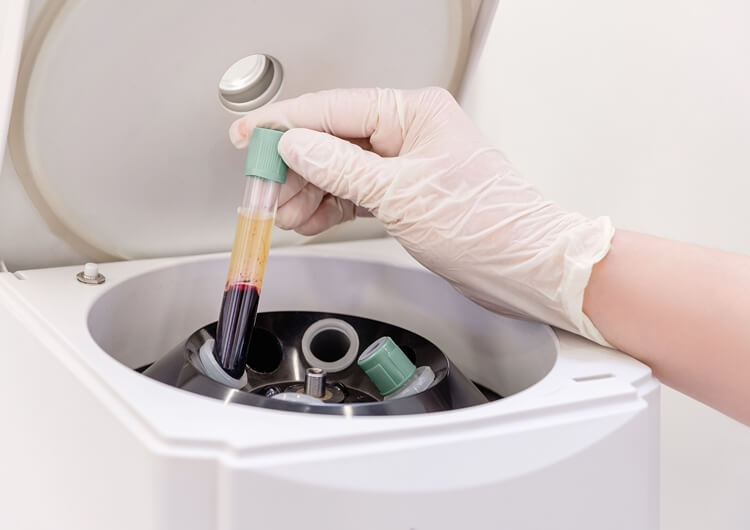
Centrifuges are a cornerstone of downstream processing in biopharmaceutical manufacturing. By harnessing centrifugal force, these machines efficiently separate biological materials based on density, enabling the clarification of broths and the harvesting of cells.
From cell culture harvesting to lysate clarification and product recovery, centrifugation plays an important role in producing high-purity biopharmaceutical products.
Modern biopharma centrifuges often operate continuously to handle large volumes (thousands of liters) of fermentation or cell culture, while maintaining sterility and product quality.
Disc-stack centrifuges in a biotech production facility accelerate the separation of cells and solids from liquid culture media. Each application comes with its own biological context and technical considerations. Below, we delve into how centrifugation is used in each scenario, the challenges, and the types of centrifuge configurations that are suitable.
The Role of Centrifuges in Pharmaceutical Manufacturing
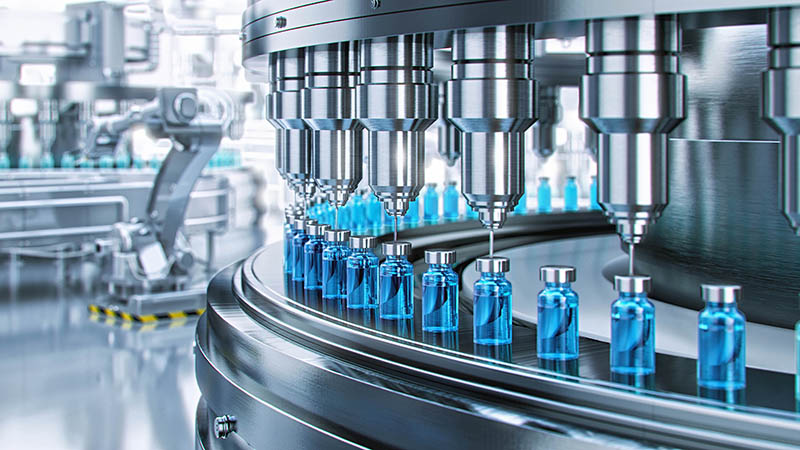
Pharmaceutical production involves several critical steps, including drug formulation, extraction, purification, and waste treatment. Throughout these processes, centrifugal force is used to separate materials based on differences in density.
Key Functions of Centrifuges in Pharmaceutical Manufacturing:
- Separation of Active Pharmaceutical Ingredients (API): Centrifuges enable the efficient separation of API, which is a fundamental step in producing high-quality pharmaceuticals.
- Purification of Biological Samples: This includes processes such as protein separation and cell harvesting, allowing fine particles and biological materials to be separated efficiently.
- Waste Management and Solvent Recovery: Centrifuges help separate waste materials and recover solvents, reducing production costs while minimizing environmental impact.
Types of Centrifuges in the Pharmaceutical Industry
The pharmaceutical industry utilizes various types of centrifuges; the following provides an overview of these different centrifuge types.
Basket Centrifuges
Basket centrifuges feature a simple structure and high efficiency, making them widely used in batch production processes. By rotating a basket, they utilize centrifugal force to separate the solid and liquid phases within a suspension. These centrifuges have broad applications in pharmaceutical manufacturing and are frequently employed in processes such as crystallization and filtration—procedures where the separation of solid particles from the liquid phase is critical. However, Huading Separator does not offer this specific type of centrifuge.
Decanter Centrifuges
Decanter centrifuges are commonly used to process suspensions with a high solid content. Additionally, when two liquids possess different specific gravities, decanter centrifuges are often utilized to separate them. These centrifuges are typically paired with skimming tubes to remove the separated, lower-density substances.
Disc Centrifuges and Tubular Centrifuges
Disc centrifuges and tubular centrifuges are utilized for the clarification of suspensions and for high-speed separation, respectively. These centrifuges are suitable for use in specific pharmaceutical applications.
Peeler Centrifuges
Peeler centrifuges are specialized for batch processing and are applied in the production of Active Pharmaceutical Ingredients (API) as well as for impurity removal. However, Huading Separator does not offer this specific type of centrifuge.
Separation of CHO Mammalian Cell Cultures
CHO (Chinese Hamster Ovary) cells are the workhorse of biopharmaceutical production, commonly used to produce monoclonal antibodies and other therapeutic proteins.
After a fed-batch or perfusion culture reaches harvest, the cells must be separated from the valuable extracellular product (the culture supernatant). Centrifugation is a primary method for cell harvesting in this context.
A high-speed disc-stack centrifuge is typically employed to continuously clarify the cell culture broth, removing the CHO cells and cell debris while preserving the proteins in the clarified liquid.
Technical considerations for CHO cell centrifugation include the relatively large cell size (~10–20 µm) and shear sensitivity of mammalian cells. The centrifuge must provide sufficient g-force to pellet or capture cells (often 5,000–10,000+ g), but without excessive shear that could lyse cells and release contaminants.
Temperature control is also important. Harvest is often done at cool temperatures (~4–10 °C) to maintain protein stability and prevent microbial growth.
Disc-stack centrifuges designed for biopharma use, such as Huading’s BTSX series, address these needs by operating under sterile, closed conditions with CIP/SIP (clean-in-place/steam-in-place) capability. They offer features like automated periodic solids ejection to handle cell biomass.
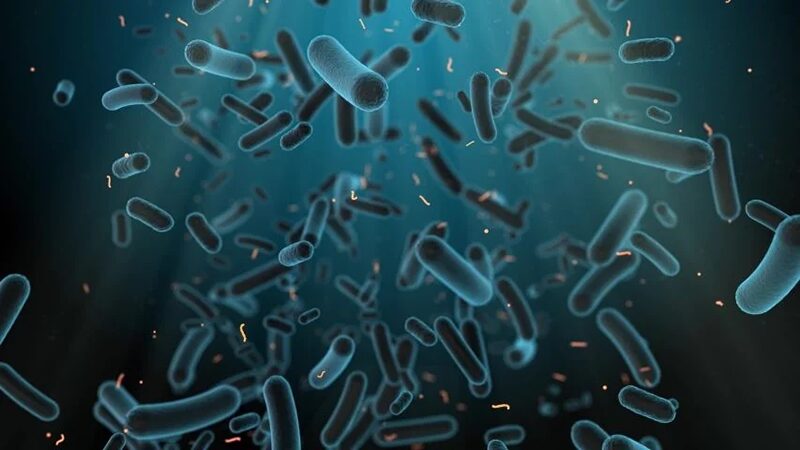
Clarification of E. coli Lysate
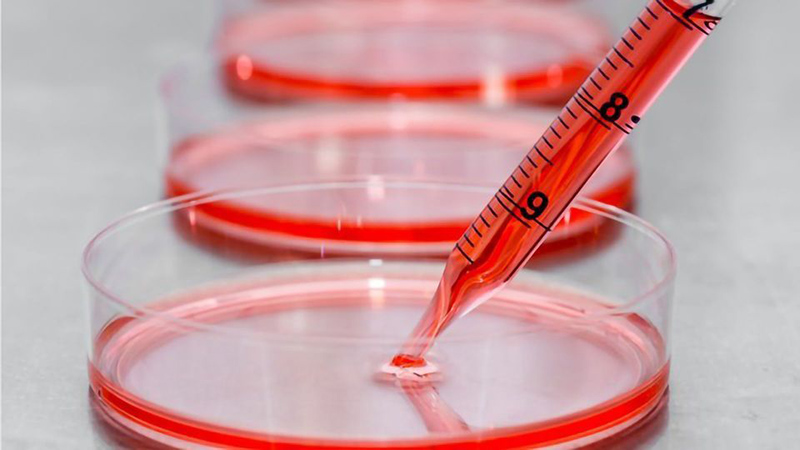
coli is a widely used microbial host for producing recombinant proteins (insulin, enzymes, plasmid DNA, etc.). After fermentation, if the product is intracellular or periplasmic, the bacteria are lysed (for example, via high-pressure homogenization) to release the target product.
This results in a cell lysate containing cell debris, soluble proteins, DNA, and other components. Centrifugal clarification is a crucial step to separate the solid cell debris from the liquid containing the product.
High-speed centrifuges can rapidly remove bulk debris, dramatically reducing the load on downstream filters. In large-scale processes, continuous disc-stack centrifuges with self-cleaning (solids ejecting) bowls are preferred to handle the high solids content and viscosity of E. coli lysates.
Indeed, Huading’s steam-sterilizable disc separators are designed for such biotech applications, with capacities from 100 up to 10,000 L/hour based on E. coli feedstocks. These centrifuges operate at high g-forces to sediment the fine bacterial debris effectively.
Key technical challenges in clarifying bacterial lysates include the small particle size of E. coli fragments (often <1 µm) and the potential for viscosity increase due to released DNA.
Disc centrifuges provide a large equivalent filtration area (thanks to their conical disc stacks) but may not remove the very finest particles below ~0.5–1 µm. Thus, a centrifuge typically achieves the bulk clarification, and a subsequent depth filtration step polishes the supernatant to remove fine particulates.
Temperature control is important here as well – lysate clarification is often done cold (4 °C) to preserve protein stability and reduce foaming.
For very high cell density cultures, nozzle-type disc centrifuges (which continuously discharge concentrated solids through peripheral nozzles) can be used to handle the heavy solids load without frequent stopping. A clarification centrifuge configured in this way ensures robust, scalable processing of E. coli lysates.
Isolation of Saccharomyces cerevisiae (Baker’s Yeast)
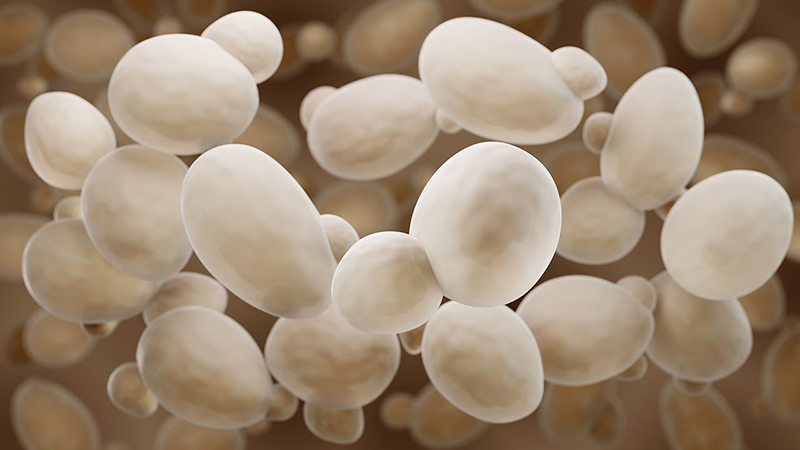
Saccharomyces cerevisiae, or baker’s yeast, is used not only in brewing and baking but also in biotechnology for producing vaccines (e.g. Hepatitis B vaccine) and recombinant proteins.
In bioprocesses involving yeast fermentation, centrifuges are commonly employed to separate yeast cells from the culture broth. Yeast cells are larger (5–10 µm) and more robust than mammalian cells, which generally makes them easier to sediment.
In fact, the brewing industry heavily relies on disc-stack centrifuges to rapidly remove yeast and clarify beer after fermentation. Similarly, in a biopharmaceutical context, a centrifuge can harvest yeast biomass either to collect the cells or to clarify the supernatant if the product is extracellular.
The isolation of yeast via centrifugation must account for high cell densities and often high viscosity in fermentation broths. Disc-stack centrifuges with self-cleaning bowls are effective, as they can continuously process large volumes and periodically eject the dense yeast solids.
Throughputs of tens of thousands of liters per hour are achievable with industrial yeast separators. Yeast are less shear-sensitive than animal cells, but gentle handling is still beneficial if the goal is to keep cells viable.
In some cases, decanter centrifuges are also used for yeast separation, especially if a very high solids content slurry is being dewatered.
Decanters excel at producing a concentrated yeast paste, whereas disc centrifuges excel at producing a clear liquid. For most upstream fermentation harvests, however, a disc centrifuge is preferred for its clarity and continuous operation.
Centrifugal Collection of Probiotics
Probiotics, such as Lactobacillus and Bifidobacterium species, are cultivated at industrial scale to produce dietary supplements and functional foods. Once a probiotic culture has grown to the desired density, the bacterial cells need to be collected (harvested) from the fermentation medium, typically to be concentrated and dried into a powder.
Centrifugation is a common method for separating and collecting probiotic bacterial cells from culture medium. Compared to filtration, centrifuges offer faster separation, higher efficiency, and a closed, hygienic process that is well-suited for large-scale operations.
Importantly, continuous centrifugation can be achieved, allowing ongoing harvesting of probiotics from a production fermentor. When collecting probiotics, several technical considerations arise.
Cell viability is crucial since these bacteria are intended to be alive when administered to consumers. Thus, the separation process should minimize cell damage: gentle acceleration, avoidance of excessive heat, and short residence times in the centrifuge all help maintain viability.
Many industrial probiotic processes utilize disk-stack centrifuges because they rapidly separate cells while operating in a sealed environment that protects against contamination.
The disc stack’s large settling area yields a good separation effect even for relatively small bacterial cells. Often, the centrifuge is run at chilled temperatures (e.g. <10 °C) to keep the probiotics stable.
After centrifugation, the concentrated probiotic cell paste can be further processed (washed, resuspended, and then freeze-dried or spray-dried). Huading’s disc separators are widely used in the probiotic industry, illustrating their reliability.
The feed is introduced through a central pipe and flows through many thin disc gaps; solids (probiotic cells) slide outwards and collect, while clarified broth exits via overflow.
This design dramatically increases the effective settling area and shortens settling distance, achieving excellent separation. By leveraging such centrifuge technology, manufacturers can efficiently produce high-potency probiotic products.
The proven performance and reliability of Huading’s separators in probiotic production plants have earned trust in the industry, highlighting centrifugation as the go-to solution for probiotic separation.