
E.coli Fermentation Broth Treatment for Biopharmaceutical Production
Jul 15,2026
The treatment of Escherichia coli (E. coli) fermentation broth is a critical step in biopharmaceutical manufacturing. Whether producing recombinant proteins, enzymes, vaccines, or amino acids, downstream separation directly affects product recovery, purity, and overall process efficiency.
As fermentation technologies continue to improve, cell densities in E. coli cultures have increased significantly. While higher biomass leads to greater productivity, it also creates new challenges for downstream processing. Efficient removal of bacterial cells and suspended solids is essential before filtration, purification, or product extraction.
Among the available separation technologies, disc stack centrifuges have become the preferred solution for continuous clarification because they combine high throughput, reliable operation, and gentle product handling. They are now widely used in pharmaceutical, biotechnology, and industrial fermentation facilities around the world.
What Is E. coli Fermentation Broth?
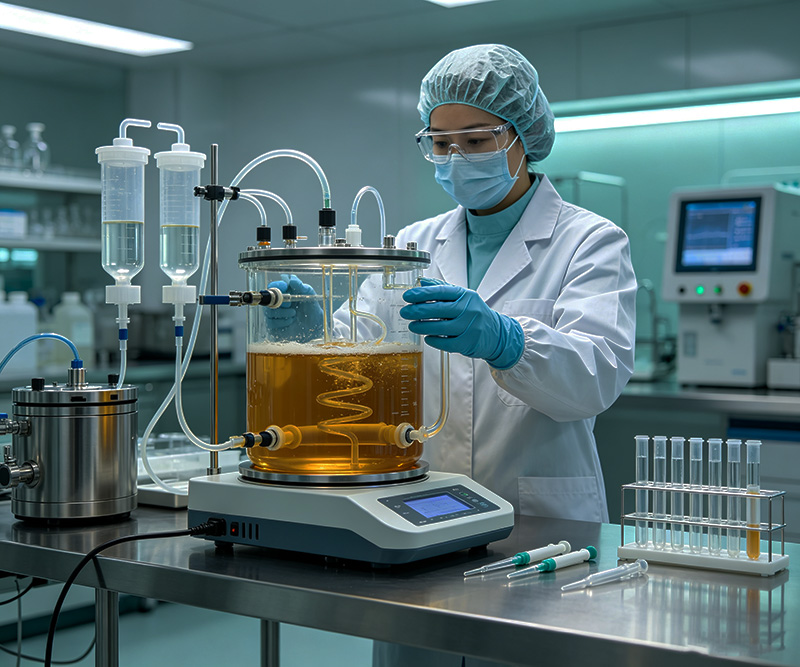
E. coli fermentation broth is the liquid mixture produced during microbial fermentation. Besides the target microorganism, it contains nutrients, metabolites, salts, proteins, and residual culture medium. Depending on the production process, the desired product may remain inside the bacterial cells or be secreted into the surrounding liquid.
Before purification begins, these components must be separated efficiently. The quality of this initial clarification step has a direct impact on downstream filtration, chromatography, and final product yield.
Why Is E. coli Fermentation Broth Difficult to Process?
Unlike many fermentation systems, E. coli cultures typically reach very high cell concentrations. The bacterial cells are extremely small and remain evenly suspended throughout the broth, making gravity settling impractical.
In addition, increasing biomass concentration raises the viscosity of the fermentation broth, which places greater demands on separation equipment. If solids are not removed efficiently, downstream membrane systems may foul rapidly, leading to higher operating costs, reduced productivity, and more frequent maintenance.
For pharmaceutical manufacturers, the process must also maintain strict hygienic standards to prevent contamination throughout production.
Typical Downstream Processing of E. coli Fermentation Broth
Downstream processing begins immediately after fermentation and consists of several interconnected separation and purification stages. While the exact process varies depending on the product, a typical production flow follows this sequence:
➔
Cell Separation
➔
Cell Harvesting
➔
Cell Disruption
➔
Clarification
➔
Purification
➔
Final Product
The first separation stage is particularly important because it removes the majority of suspended biomass before finer purification steps. Efficient clarification not only improves product recovery but also protects downstream filtration and chromatography systems from excessive solids loading.
Why Disc Stack Separators Are Widely Used?
Disc stack separators have become the industry standard for fermentation broth clarification because they provide continuous, high-speed solid-liquid separation without interrupting production.
Unlike conventional filtration systems that gradually become clogged as solids accumulate, disc stack centrifuges remove bacterial cells through centrifugal force, allowing them to process high-cell-density fermentation broth with consistent performance. By reducing the solids entering membrane filtration systems, they help extend membrane service life while lowering cleaning frequency and operating costs.
Their enclosed design also makes them well suited for pharmaceutical production, where sterile processing and contamination control are essential.
Huading Separator Solutions for Fermentation Processing
Huading Separator develops high-speed disc stack centrifuges specifically for biotechnology and pharmaceutical applications. Designed for continuous fermentation processing, the equipment combines efficient clarification with hygienic operation to meet the demanding requirements of modern production facilities.
Our fermentation separators feature enclosed stainless-steel construction with Clean-in-Place (CIP) and Steam-in-Place (SIP) capability, allowing equipment to be cleaned and sterilized without disassembly. Automatic solids discharge supports uninterrupted operation while reducing manual intervention and maintenance time.
With optimized disc stack geometry and high centrifugal force, Huading separators efficiently remove bacterial biomass while minimizing shear stress on sensitive biological materials. The systems are suitable for laboratory, pilot-scale, and industrial fermentation plants with varying production capacities.
How to Select the Right Separator?
Choosing the appropriate separator depends on both the fermentation process and production objectives. Factors such as processing capacity, biomass concentration, sterility requirements, and whether the target product is intracellular or extracellular all influence equipment selection.
| Selection Factor | Recommended Separator Configuration |
|---|---|
| Small or pilot-scale production | Compact manual disc stack separator |
| Medium to large continuous production | Self-cleaning disc stack separator |
| Pharmaceutical or biotech processing | CIP/SIP hygienic disc separator |
| High-solids fermentation broth | Automatic solids discharge system |
| Sterile production environment | Fully enclosed separator design |
| High product recovery requirement | High-efficiency disc stack configuration |
Working with an experienced equipment manufacturer helps ensure the separator is properly matched to the fermentation process, improving both product quality and long-term operating efficiency.
Applications Beyond E. coli Fermentation
Although widely used for E. coli fermentation broth clarification, disc stack separators are also applied in many other microbial and biopharmaceutical processes. Typical applications include recombinant protein production, enzyme manufacturing, vaccine production, amino acid fermentation, yeast cultivation, probiotic processing, and microbial biomass recovery.
Because the same separation principle can be adapted to different microorganisms and fermentation media, disc stack centrifuges have become an essential part of modern downstream processing across the biotechnology industry.
Conclusion
Efficient treatment of E. coli fermentation broth is essential for achieving high product yield, stable operation, and cost-effective downstream processing. By removing bacterial cells quickly and continuously, disc stack separators improve clarification efficiency while protecting downstream purification equipment.
With extensive experience in centrifugal separation technology, Huading Separator provides customized solutions for biotechnology, pharmaceutical, and industrial fermentation applications. From pilot plants to large-scale production facilities, our disc stack centrifuges are engineered to deliver reliable performance, hygienic operation, and long-term process stability.
FAQ
-
What is E. coli fermentation broth?
E. coli fermentation broth is the liquid mixture produced during fermentation, containing bacterial cells, nutrients, metabolites, proteins, and culture medium. It requires clarification before downstream purification.
-
Why are disc stack separators used for fermentation broth?
Disc stack separators continuously remove bacterial cells from the broth, improving clarification efficiency and reducing the workload on downstream filtration systems.
-
Can disc stack separators operate under sterile conditions?
Yes. Pharmaceutical-grade disc stack separators are available with enclosed designs, CIP cleaning, and SIP sterilization to meet hygienic processing requirements.
-
What industries use fermentation broth separators?
Disc stack separators are widely used in biotechnology, pharmaceutical manufacturing, enzyme production, vaccine processing, amino acid fermentation, and microbial biomass recovery.
--- END ---


