
How is Your Decanter Centrifuges Operating?
Do you need technical support? Please feel free to contact us.
Jun 24,2026
Efficient solid-liquid separation is crucial for modern industrial processing. Decanter centrifuges are among the most widely used separation systems. Renowned for their continuous operation, high throughput, and ability to handle harsh process conditions, Decanter centrifuges have become indispensable equipment for companies seeking reliable and cost-effective separation performance.
Huading Separators provides advanced centrifugal separation solutions designed to meet the evolving needs of industrial processing applications. This guide will explore the working principles, key components, operating precautions, and how to maximize separation efficiency of Decanter centrifuges.
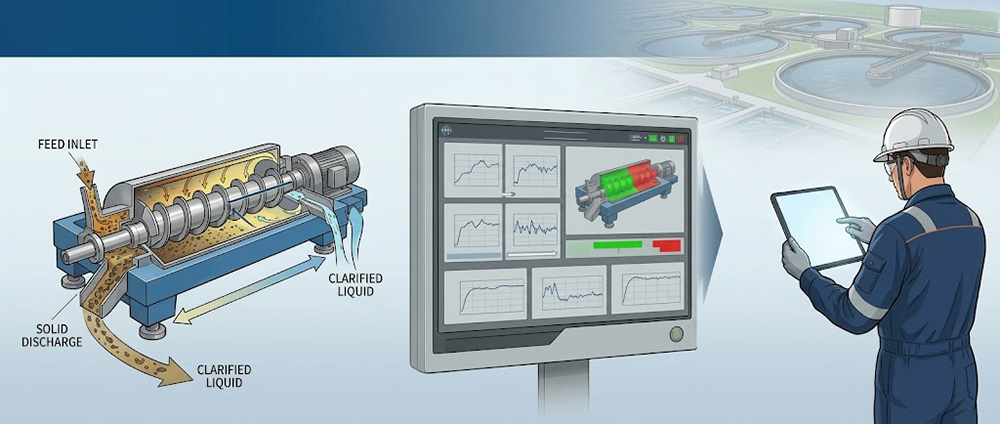
A decanter centrifuge, also known as a horizontal bowl centrifuge, solid-phase bowl centrifuge, or spiral centrifuge, is a machine that uses high-speed continuous rotation to separate solid materials from liquids. Unlike gravity settling systems that require long residence times, decanter centrifuges accelerate the separation process by generating centrifugal forces thousands of times greater than gravity.
This equipment continuously processes slurries by separating them into clarified liquids and concentrated solids. This makes it ideal for applications with high solids content, continuous processing requirements, and high-volume production.

Common applications of decanter centrifuges include:
Because the system operates continuously, it provides stable separation performance while minimizing downtime and manual operation.
The principle of solid-liquid separation in a Decanter centrifuge system is gravity. In separation technology based on separation at one-tenth the acceleration due to gravity, the gravity separation of mud mixtures and water takes a considerable amount of time, while the high-speed rotation of the centrifuge greatly accelerates this gravity process.
The operation of a decanter centrifuge involves several key components working together to achieve continuous solid-liquid separation efficiently and reliably.

The process slurry enters the centrifuge through the feed pipe located at one end of the machine. The feed system is designed to introduce the product smoothly into the rotating bowl while minimizing turbulence and unnecessary shear forces.
As the material enters the bowl, high rotational speed generates powerful centrifugal force. Heavier solid particles are forced outward through the liquid phase and collect along the inner wall of the rotating bowl, while the lighter liquid phase remains closer to the center.
The rapid rotation of the bowl enables efficient separation of solids and liquids in a continuous process.
Continuous bowl rotation is typically controlled using a Variable Frequency Drive (VFD), which allows operators to adjust rotational speed based on process requirements and separation performance goals.
This flexibility helps optimize clarification efficiency, solids dryness, and energy consumption.
Inside the rotating bowl is a screw conveyor, also known as a scroll. The scroll rotates at a slightly different speed than the bowl itself, creating what is known as differential speed.
The scroll continuously removes the separated solids from the bowl wall and transports them toward the solids discharge section located at the conical end of the centrifuge.
Due to pressure balance principles within the rotating system, the clarified liquid phase moves in the opposite direction of the solids flow. Meanwhile, the discharged solids create a natural sealing effect at the solids outlet, helping maintain stable internal pressure conditions.
Differential speed directly controls the retention time of solids inside the centrifuge. The longer the solids remain exposed to centrifugal force, the more moisture is removed during the dewatering process.
As a result, slower differential speeds generally produce drier solids, while higher differential speeds increase solids transport capacity and throughput.
Several operational parameters directly influence the efficiency of a decanter centrifuge.
Bowl Speed: Higher bowl speeds generate stronger centrifugal force, improving fine-particle separation and liquid clarity. However, excessively high speeds may increase power consumption and equipment wear.
Differential Speed: Differential speed refers to the rotational speed difference between the bowl and the conveyor.
Finding the correct balance is critical for achieving optimal performance.
Feed Rate: Feed flow rate determines the retention time of material inside the bowl. Excessive feed rates may reduce clarification quality if the machine becomes overloaded.
Pond Depth: Pond depth describes the liquid level inside the bowl. A deeper pond can improve clarification efficiency, while a shallower pond may produce drier solids.
Feed Characteristics: Particle size, viscosity, density, temperature, and solids concentration all affect separation behavior and machine performance.
A proper maintenance plan for a Decanter decanter centrifuge should include daily, weekly, monthly, and yearly maintenance procedures. Many routine checks can be performed by trained plant operators. However, more critical maintenance needs may require the expertise, specialized tools, and technical support of a professional centrifuge service provider or certified field service technician to conduct a comprehensive assessment of the equipment.
Based on years of experience manufacturing, repairing, and maintaining centrifuges of various brands, we recommend the following routine preventive maintenance measures to maximize equipment reliability, operational efficiency, and lifespan.
Operators should perform routine inspections of the centrifuge every day.
The following components and operating conditions should be checked regularly:
Fasteners and Safety Guards: Visually inspect external bolts and fasteners for looseness and check all safety guards for cracks or damage.
Discharge Hoppers and Piping: Inspect the solids discharge hopper and connected piping for leaks, buildup, or abnormal wear.
Noise and Vibration: Monitor operating noise and vibration levels through both direct observation and control panel indicators. Unusual vibration or noise may indicate imbalance, wear, or mechanical issues that require immediate attention.
Refer to the operation and maintenance manual for specific weekly maintenance procedures.
Common recommended tasks include:
Lubricate Internal Bearings: Apply grease to internal bearings according to the manufacturer’s lubrication schedule to ensure smooth operation and reduce wear.
Check Belt Tension: Inspect drive belts for proper tension and alignment. Loose or worn belts can reduce operating efficiency and increase equipment stress.
Inspect Lubrication and Oil Levels: Check gearbox lubricant and oil levels to ensure adequate lubrication throughout the drive system.
The following maintenance inspections are typically recommended on a monthly basis:
Wear Inspection: Inspect the rotor, bowl, conveyor, and housing components for signs of wear, erosion, or material buildup.
Electrical Components and Wiring: Examine wiring, electrical connections, and control components for wear, corrosion, or damage that could affect system performance or safety.
Discharge Areas: Inspect both the solids and liquid discharge sections for blockages, excessive wear, or material accumulation that may restrict flow or reduce separation efficiency.
A comprehensive functional check should be performed annually to verify the operation of safety interlocks, sensors, alarms, and system controls.
The PLC backup battery should also be inspected and replaced if necessary.
The main bearing and internal bearings should typically be replaced every 15,000 hours of operation to maintain reliable performance and prevent unexpected failures.
Other wear parts, such as the feed nozzle, discharge nozzle, wear-resistant liners, and internal wear plates, should also be carefully inspected and replaced as needed to maintain optimal centrifuge efficiency and operational reliability.
Do you need technical support? Please feel free to contact us.
Just as centrifuge differential drives may require recalibration under abnormal process conditions, centrifuge drums and screw assemblies may also require rebalancing in certain situations. This section explains the basic principles of centrifuge balancing and why balancing at actual operating speeds is crucial for safe and reliable performance.
An unbalanced Decanter centrifuge is like a vehicle with unbalanced tires. When tires are unbalanced, the vehicle experiences vibrations and instability, negatively impacting steering, speed, safety, and component lifespan. The same principle applies to centrifuges.
Improper centrifuge balancing leads to excessive vibration during operation, causing premature wear and damage to rotating parts, bearings, seals, and structural components.
Over time, this significantly increases maintenance costs, reduces equipment reliability, and results in unnecessary downtime. Maintaining precise balance is essential for smooth operation, extended equipment lifespan, and protecting overall system performance.
Decanter centrifuges should typically be balanced after a major overhaul or rebuild, generally after approximately 15,000 to 20,000 hours of operation. Balancing may also be necessary if the machine exhibits excessive vibration, abnormal noise, or unstable operation during production.
These symptoms usually indicate that the rotating components are no longer balanced and should be inspected immediately to prevent further mechanical damage.
In most cases, the centrifuge drum and screw conveyor assembly require balancing.
Each component is first balanced individually, and then the entire rotating assembly is balanced as a whole. Finally, testing is performed to ensure that the centrifuge operates smoothly under actual process conditions and meets the required operating specifications.
Proper balancing of these two components is crucial for minimising vibration and maintaining long-term stable operation.
Dynamic balancing of the centrifuge is crucial at actual operating speeds. Horizontal decanter centrifuges operate at extremely high speeds, generating forces equivalent to 2000 to 4000 times the acceleration due to gravity (G-force).
To achieve precise dynamic balancing of the drum and screw assembly, the equipment must be dynamically balanced at its normal operating speed. Low-speed dynamic balancing methods cannot fully simulate the dynamic forces generated during actual operation.
However, operating rotating equipment at such high speeds requires specialised safety measures, facilities, and procedures. Therefore, professional centrifuge service providers use specially designed high-speed dynamic balancing equipment for dynamic balancing operations.
Centrifuges requiring dynamic balancing for repair or refurbishment are tested in specially designed dynamic balancing chambers, which are designed to provide maximum operational safety for technicians and customers observing the operation.
These facilities not only help reduce noise generated during high-speed dynamic balancing but also provide critical protection during operation.
In addition to ensuring operator safety, advanced balancing chambers employ extremely robust foundation structures to absorb vibrations and support high-speed rotating equipment.
Large overhead cranes are typically used to safely move heavy-duty centrifuge drums and screw assemblies into and out of the balancing chamber. During balancing, reinforced protective covers are closed to ensure the balancing chamber remains completely safe while the balancing machine is operating at high speeds.
Balancing at operating speed most accurately reflects actual operating conditions. Even seemingly insignificant imbalances at low speeds become very serious at full speed, leading to amplified vibrations and mechanical stress.
Proper high-speed balancing helps to:
For high-performance centrifugal systems, precise balancing is not just a maintenance procedure, but a critical step in ensuring long-term efficient operation and reliable performance.
Perfect solid-liquid separation performance begins with precise control of process variables and culminates in meticulous maintenance of mechanical details. Whether treating high-concentration industrial wastewater or recovering high-value-added food proteins, ensuring your decanter centrifuge maintains perfect dynamic balance under high-speed operation is the cornerstone of continuous and safe production.
How is your decanter centrifuge currently operating? Are you experiencing abnormal vibrations or decreased separation efficiency?
Feel free to leave your questions in the comments section below, or contact Huading Centrifuge’s technical experts directly. Click the button below to get professional centrifuge testing and optimization advice immediately!
--- END ---


