
How Centrifugal Separators Recover and Concentrate Yeast Cells
Aug 20,2026
Yeast is one of the most widely produced microorganisms in the world. Baker’s yeast goes into bread, brewer’s yeast drives fermentation in beer, and feed and nutritional yeasts are produced for animal and human consumption. Despite the different end uses, the production process has one thing in common: after fermentation, the yeast cells must be separated from the broth and concentrated for further processing.
This is where centrifugal separation becomes a key part of the yeast production line. At Huading, we manufacture disc stack separators, nozzle centrifuges, and decanter centrifuges for different stages of yeast processing. In this guide, we look at how yeast is recovered and concentrated, where each type of centrifuge fits into the process, and the main factors to consider when designing a new separation line or upgrading an existing one.
Why Centrifugation Is Essential in Yeast Production
Yeast cells are single-celled organisms, roughly 5 to 10 microns across, suspended in a fermented broth that also carries spent sugars, proteins, and other solids. The cells sit only slightly denser than water, and a mature broth holds billions of them per liter.
Filtration struggles with yeast. The cells are soft and deformable, and they blind filter media quickly. Centrifugation sorts by density instead of pore size, so the cells settle out under forces thousands of times stronger than gravity. Every serious yeast operation, from the biggest baker’s yeast separator plants to smaller specialty producers, runs on centrifugal force.
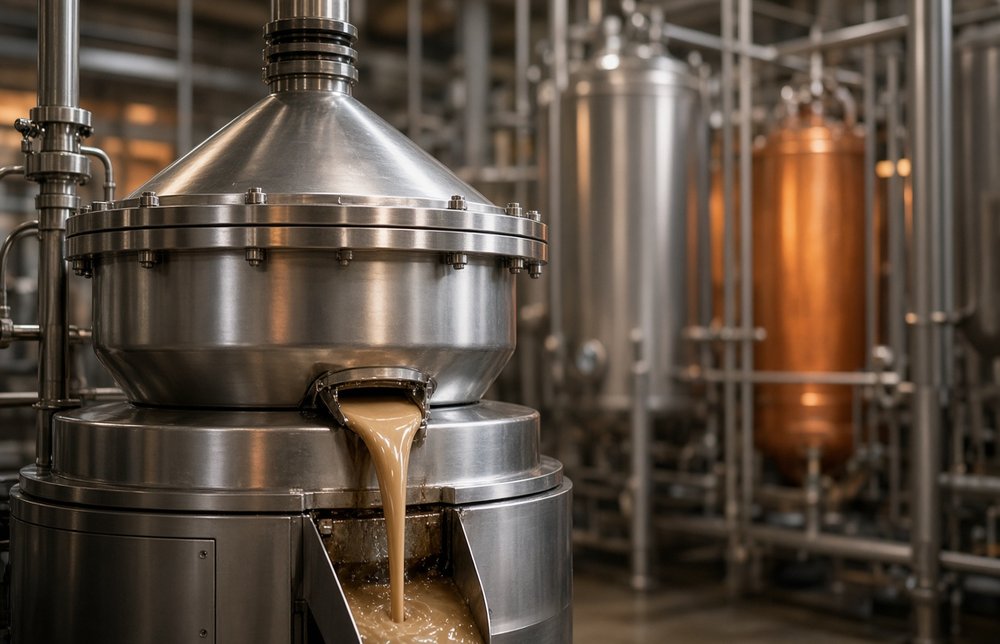
From Fermented Broth to Yeast Cream: The Process Steps
First Separation: Concentrating the Cells
Yeast grows by fermentation, usually on molasses or another sugar source. When fermentation finishes, the broth holds only a few percent dry solids of yeast. A yeast separator concentrates these cells in the first pass, typically to 15 to 20 percent solids. That intermediate product is called yeast cream.
This first pass removes the bulk of the spent medium and sets the yield for everything downstream. The more cells the separator recovers here, the more yeast the plant gets from each kilogram of sugar.
Washing: Removing Molasses Residue
Molasses gives yeast its dark color and carries impurities that would stain the final product. After the first concentration, the cream is diluted with water and run through the separator again. The wash step replaces the spent medium with clean water, brightens the yeast, and lifts the quality of the cream, compressed yeast, and dried yeast made from it.
Final Concentration and Downstream Processing
After washing, the yeast cream is concentrated again to reach the solids content required for the final product. Cream yeast can be shipped at this stage, while compressed yeast goes through filtration and pressing before being formed into blocks. Active dry yeast and instant yeast require an additional drying step.
The more water removed during centrifugation, the less work is left for the dryer. Even a small increase in solids concentration can reduce the drying load and, over large production volumes, translate into meaningful energy savings.
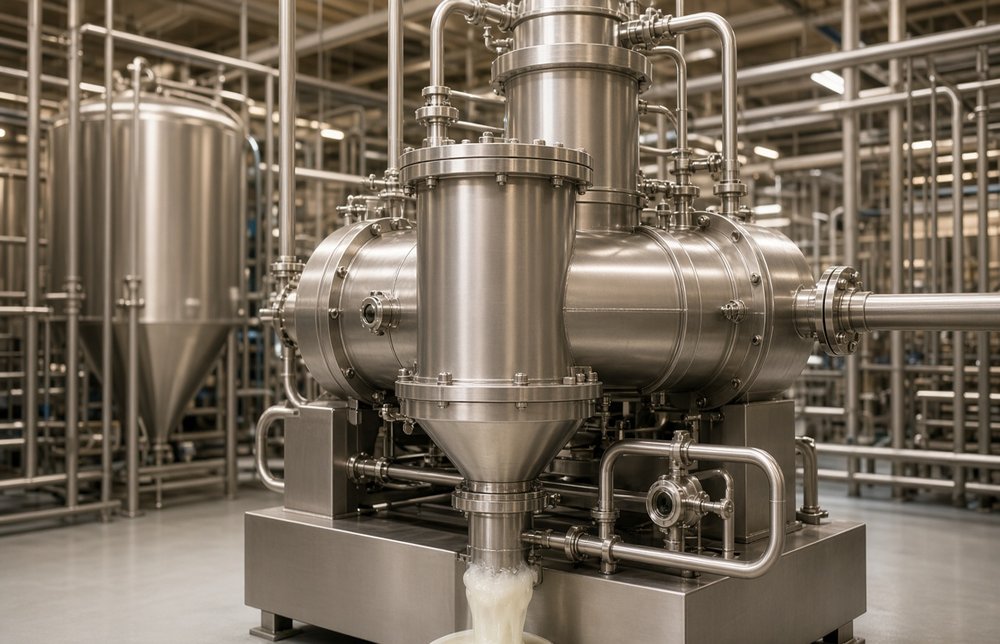
Nozzle Separators: The Workhorse of Yeast Recovery
The machine at the center of most yeast lines is the nozzle separator, a disc stack centrifuge that discharges solids continuously. Yeast lines run around the clock, and cells accumulate faster than a self-cleaning bowl can flush, so the nozzle design pushes concentrated yeast out steadily while the machine keeps spinning.
Our nozzle centrifuges are disc-type machines built for yeast separation, washing, and the clarification of high-solids fermentation broths. They separate particles down to 0.5 microns, which covers yeast cells and most fermentation residues, and they run through whole shifts without stopping for manual discharge.
Choosing Between Nozzle, Disc Stack, and Decanter
The nozzle separator is the standard for yeast recovery, but a complete line often mixes machines.
A nozzle separator handles the main concentration and washing stages, where solids run high and production never stops. A self-cleaning disc separator fits the later, cleaner stages, where the cream is denser and the discharge smaller. A decanter centrifuge earns its place at the front of the line for heavy or viscous broths, taking out the bulk solids so the separators downstream run cleaner.
Tubular centrifuges show up in specialty yeast work and pilot plants, where batch operation and very high separation force beat throughput. Most commercial yeast plants run a nozzle separator as the core, with decanters or self-cleaning separators around it depending on the broth.
Hygiene and Yield Considerations
Yeast cream quality depends on both recovery rate and sanitary handling. Product-contact parts should use stainless steel with a sanitary finish, and CIP capability helps keep changeovers clean between batches. Continuous nozzle discharge also shortens residence time, which helps protect cell activity while keeping throughput high.
Because dryer energy is tied directly to cream solids, raising solids concentration before drying improves yield economics as well as product quality. Holding hygiene standards high across concentration and washing protects both cell viability and final product color.
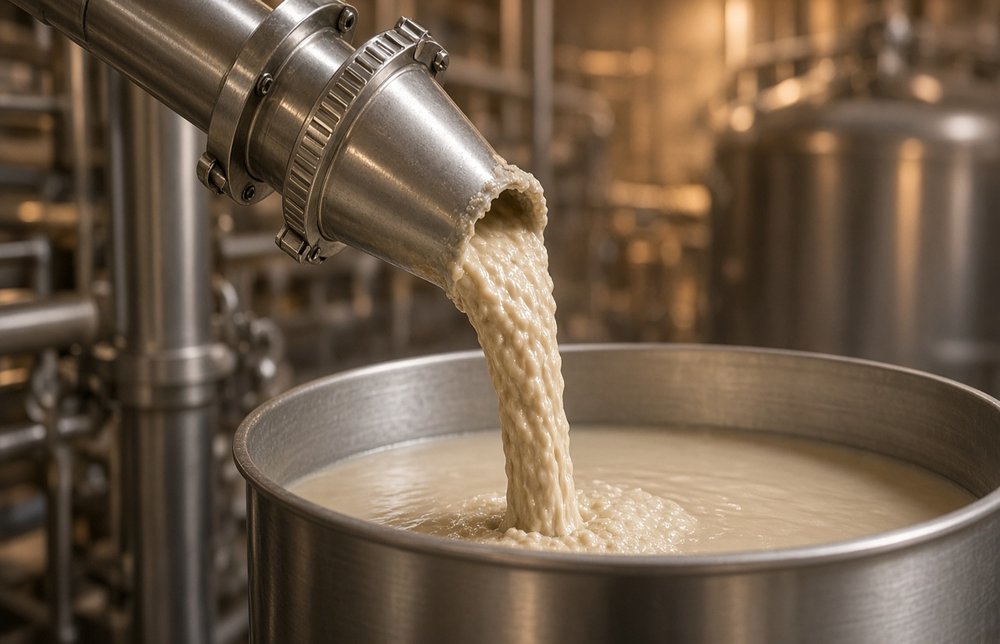
Huading’s Yeast Separation Line
Our equipment covers the main separation stages in yeast processing. The FNEN nozzle centrifuge series is designed for applications including cream yeast, compressed yeast, active dry yeast, instant yeast, rapid-rise yeast, and deactivated yeast. Depending on the process, self-cleaning disc stack separators, decanter centrifuges, and tubular centrifuges can also be used for pretreatment, polishing, or pilot-scale production.
There is no single centrifuge setup that works for every yeast plant. The right configuration depends on the fermentation broth, solids concentration, production capacity, final product, and hygiene requirements. Share your yeast product and daily throughput with us, and our engineers can recommend a separation process and equipment configuration based on your actual operating conditions.
Related Equipment from Huading
Baker’s Yeast Separator (FNEN Nozzle Series): continuous nozzle centrifuge for yeast concentration and washing, separation down to 0.5 microns.
Nozzle Separator: continuous solids discharge for high-volume fermentation broths.
Self-Cleaning Disc Separator: automatic sludge discharge for the cleaner stages of yeast cream processing.
Separating Decanter Centrifuge: bulk solids removal for heavy or viscous broths.
GQ Tubular Centrifuge: batch separation for pilot scale and specialty yeast work.
Yeast Products and Their Separation Needs
The separation line shifts a little by final product, and the map is worth knowing.
- Cream yeast ships as a liquid suspension, so it needs reliable concentration and washing, with cold-chain handling after separation.
- Compressed yeast gets pressed into blocks, so the separator should hand the filter the highest solids it can, cutting the filter’s load and cycle time.
- Active dry yeast and instant yeast get dried, and here the separator is a drying cost lever. Each percentage point of solids added before the dryer trims energy use across the whole drying stage.
- Fodder yeast and yeast extract run on thinner margins, so throughput and recovery rate drive the machine choice, and continuous nozzle discharge is almost always the answer.
- Brewer’s yeast, recovered as a by-product of beer and spirits, follows the same concentration and washing logic, with the extra challenge of a broth that changes with every brewery run.
FAQ
Why is a nozzle separator used for yeast instead of a filter?
Yeast cells are soft, deformable, and blind filter media fast. A nozzle separator removes them by centrifugal force and discharges the concentrated yeast continuously, so the line never stops for cleaning.
What is yeast cream?
Yeast cream is the concentrated yeast suspension from the first separation stage, typically 15 to 20 percent dry solids. It sits between fermentation and compressed, dried, or cream yeast.
Can the same separator wash yeast?
Yes. Washing is a second separation pass: the cream is diluted with water and separated again to remove molasses residue and brighten the yeast. Nozzle separators handle both concentration and washing on the same machine.
Conclusion
Yeast manufacturing runs on centrifugal separation. A nozzle separator concentrates the fermented broth into yeast cream, washing stages clean the cells, and the final pass sets the solids level for cream, compressed, or dried yeast. Choose the right machine combination, hold the hygiene standard high, and the line will recover its yeast shift after shift.
Planning a yeast line or upgrading an existing one? Tell us your product type and tonnage, and we will map the separation stages with the machines that fit. The yeast is already in your broth. The separator is what gets it out.
--- END ---
Prev: Probiotic Fermentation Broth Clarification: How to Choose the Right Centrifuge
Already the latest article


