Maleic anhydride is an important chemical intermediate widely used across various industries. It is a fundamental structural unit in the synthesis of resins, coatings, lubricants, agrochemicals, and many polymer derivatives.
Due to its wide application and crucial role in modern manufacturing, the efficiency of maleic anhydride production and purification directly impacts product performance, process economics, and environmental compliance.
This article will explore the production methods of maleic anhydride, the challenges encountered in its separation and purification processes, and how industrial separation solutions can support efficient and reliable production.
Understanding Maleic Anhydride and Its Applications
Maleic anhydride (C₄H₂O₃) is a versatile chemical compound with several essential industrial applications. It is primarily used in the production of unsaturated polyester resins (UPR), which are used in the manufacturing of fiberglass, coatings, and composites.
Additionally, maleic anhydride is used in the production of lubricating oil additives, plasticizers, and agricultural chemicals, such as pesticides and herbicides.
Maleic anhydride’s chemical reactivity makes it ideal for various chemical modification processes, improving the properties of materials such as adhesion, compatibility, and thermal performance.
Given its wide range of applications, maintaining the required purity and consistency in maleic anhydride production is essential. This makes effective separation and purification technologies a key component in ensuring product quality and the sustainability of manufacturing processes.
Maleic Anhydride Production Process
The production of maleic anhydride involves a multi-step process, with the main chemical reaction being the oxidation of hydrocarbons such as n-butane or benzene.
Below is an overview of the typical maleic anhydride production process:
1. Oxidation Reaction
The first step in the production of maleic anhydride is the oxidation of n-butane (or other feedstocks such as benzene) in the presence of oxygen. This is typically carried out in a fixed-bed reactor using a vanadium-phosphorus oxide (VPO) catalyst at high temperatures (around 400-450°C). The oxidation reaction produces maleic acid as an intermediate and other by-products such as carbon dioxide (CO₂), carbon monoxide (CO), and water.
Key Characteristics of Maleic Anhydride
Maleic anhydride has several important characteristics that affect its production and use in industrial applications. These include:
Chemical Reactivity: Maleic anhydride reacts readily with alcohols, amines, and various other compounds to form esters, amides, and other functionalized products. This reactivity makes it highly useful in the production of unsaturated polyester resins, plasticizers, and other derivative chemicals.
Solubility: Maleic anhydride is soluble in a variety of organic solvents, including acetone and alcohols. It is also soluble in water, forming maleic acid, which is highly hygroscopic (absorbs moisture from the air).
Melting and Boiling Points: Maleic anhydride has a relatively low melting point of about 52°C and a boiling point of 202°C. This low melting point allows it to be easily handled as a liquid during processing.
Hygroscopic Nature: Maleic anhydride is highly hygroscopic, meaning it absorbs moisture from the air, which can cause it to hydrolyze into maleic acid. Therefore, special precautions need to be taken during storage and handling to avoid unwanted hydrolysis.
Toxicity: Maleic anhydride is toxic, corrosive, and an irritant to the respiratory tract, skin, and eyes. Safety measures, including proper ventilation and protective equipment, are essential during its production and handling.
The Role of Separation in Maleic Anhydride Production
The production of maleic anhydride generates several types of impurities, including maleic acid, fumaric acid (an isomer), unreacted feedstock, and heavier oxidation by-products. These impurities must be effectively removed to meet product quality standards and ensure that maleic anhydride meets the specifications required for its various industrial applications.
The purification of maleic anhydride typically involves solid–liquid separation, liquid–liquid phase separation, and fine filtration to remove solid particulates, water, and organic impurities.
The following industrial separation technologies are commonly employed in maleic anhydride production:
How Huading Separator Supports Maleic Anhydride Processing?
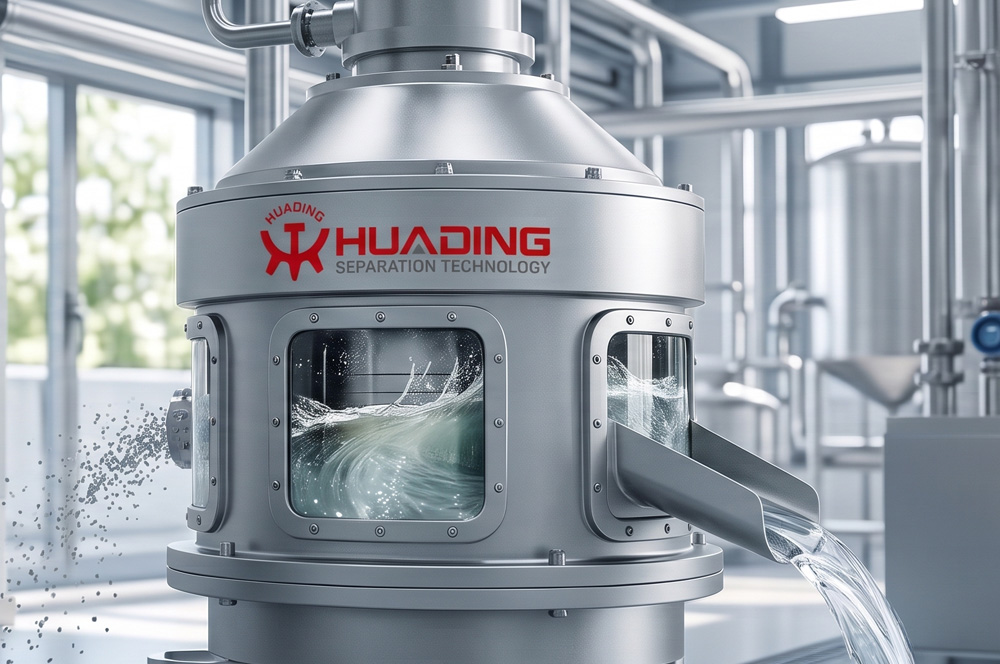
A comprehensive range of separation technologies is essential for the efficient production of maleic anhydride. These solutions address challenges in various stages of production, from initial clarification to final solvent recovery. Advanced disc stack separators, decanter centrifuges, and filtration systems help chemical producers achieve high purity, optimal operational efficiency, and cost-effective production.
Tailored solutions also support waste reduction, solvent recovery, and regulatory compliance, ultimately enhancing product quality and production capacity.
Conclusion
Maleic anhydride continues to play a crucial role in various chemical industries, from the production of unsaturated polyester resins to lubricating oil additives and agricultural chemicals. The production of high-purity maleic anhydride requires effective separation and purification processes.
Advanced centrifugal separation technologies, such as disc stack separators, decanter centrifuges, and filtration systems, are essential for achieving efficient and sustainable production, while ensuring that industry standards are met.
By utilizing reliable separation solutions, chemical producers can streamline their maleic anhydride production processes, enhance product quality, reduce waste, and improve operational efficiency.


